Envirosuite and SGS enter into strategic alliance partnership agreement

Envirosuite and SGS have entered into a strategic alliance partnership agreement for global business development of joint market opportunities.

Under the agreement, the two companies will work together to develop bundled services that combine SGS’s testing, inspection and certification services with Envirosuite’s ‘EVS Omnis’ environmental intelligence platform. The bundled services will be designed to provide complete compliance and operational optimisation solutions for companies in a range of sectors globally, including the mining, heavy industrial and oil & gas sectors.

Headquartered in Geneva, Switzerland, SGS employs 96,000 people across a network of 2700 offices and laboratories globally. Combining SGS’s services with Envirosuite’s EVS Omnis platform will allow users to manage their compliance requirements while monitoring, modelling and predicting their site’s environmental impacts to make better-informed operating decisions and preserve critical community relationships.

The agreement aims to benefit both parties with greater market access, and leverages both parties’ technologies and respective expertise to achieve strategic growth objectives globally.

Frankie Ng, SGS CEO said: “The partnership with Envirosuite is consistent with SGS’s vision to enable a better, safer and more interconnected world. To make better use of the data we generate every day in the field or in our laboratories, SGS is pursuing a data enablement strategy across its business lines. In this sense, the partnership with Envirosuite is an important milestone for environmental compliance at industrial sites and infrastructure projects.”

Jason Cooper, Envirosuite CEO said: “We are excited to partner with SGS, a leading and globally recognised organisation, to expand our opportunities especially in the mining, heavy industrial and oil & gas sectors. We expect that this collaborative relationship will produce combined solutions that will deliver even greater value to our customers, and we look forward to seeing this strategic alliance accelerate revenue growth for both companies.”

source http://sustainabilitymatters.net.au/content/waste/news/envirosuite-and-sgs-enter-into-strategic-alliance-partnership-agreement-439222105

reDirecting material from landfill

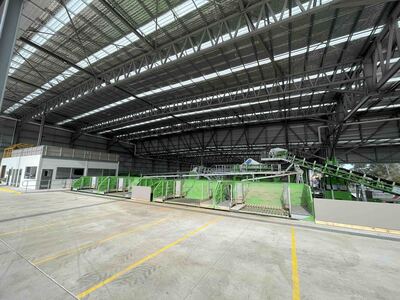
CDE has installed a waste recycling plant for reDirect Recycling at its site in Wetherill Park, in a bid to divert waste from landfill and to recover valuable resources.

reDirect Recycling provides resource recovery management, creating an industrial ecology which diverts waste from landfill to return resources into the economy. It focuses on providing a disposal and recycling solution for construction, demolition and excavation (C,D&E) waste for both dry and wet materials.

CDE worked closely alongside reDirect Recycling to design and develop a plant that could handle both wet and dry materials to recover valuable resources and aid in landfill diversion.

The solution

CDE delivered a C,D&E waste recycling solution, as well as integrating four HYDRO:Tip units to process hydro-excavated muds.

The plant, which incorporates an EvoWash sand wash plant, AquaCycle A200 thickener with water tank, centrifuge decanter, R-Series Primary Scalping Screen, Infinity dewatering screens and AggMax modular logwasher operates at a rate of 200 tph.

The solution has two feed points, the R-Series and the four HYDRO:TIP systems. At the first feed point, solid waste material is loaded directly into the R2500 with a shovel, while four trucks can simultaneously tip wet waste directly into the HYDRO:TIP bays at the second feed point.

The HYDRO:TIP is designed to handle solid-liquid waste from hydro excavation tankers and street sweepers. Its station ensures a safe platform to unload wet waste quickly and efficiently, without the need for an additional operator to manually dredge and dewater material prior to feeding.

R2500 screens the heavily clay-bound feed and removes any oversize material, protecting downstream processes while also providing sufficient energy to break up and homogenise the feed. The material is then transferred from the R2500 to the AggMax on a conveyor where the overband magnet removes ferrous metal contamination.

At the AggMax, the upward flow classification function floats off organics onto the integrated trash screen for dewatering and stockpiling. The paddles of the RotoMax RX160 encourage aggregate on aggregate attrition scrubbing for breaking down clay conglomerates and liberating clean aggregate. The Infinity H2-60 screens and dewaters three aggregate products by size and any trace sand washed off is then processed in the EvoWash wash plant to recover a 0–5 mm sand product.

Once the cyclone overflow (<75 µm clay and silts) has been treated and clarified in the AquaCycle, recyclable water overflows across the weirs and onto a static screen to remove lightweight contamination. The thickened sludge is conditioned and discharged from the AquaCycle clarifier to the sludge buffer tank and is then pumped to the centrifuge decanter for final dewatering. The recycled water from the AquaCycle and centrifuge is sent to the water tanks for recycling around the system.

The result

The technology is allowing reDirect Recycling to produce a sand product (0–5 mm) and three washed aggregates (5–20, 20–40 and 40–80 mm), as well as dewatered organics, clays and silts, to be repurposed in the construction market.

CDE business development manager for Australasia Riccardo Wong said: “Both CDE and reDirect Recycling are passionate about sustainability and reducing waste going to landfill, so we used both of our expertise to create a solution which recovers and reuses valuable resources to be repurposed in the construction market.

“Plants like this are the future of the industry in their ability to minimise waste and maximise value.”

source http://sustainabilitymatters.net.au/content/waste/case-study/redirecting-material-from-landfill-852561298

Waste to energy: fats, oils and grease to power homes

More than 80% of Australia’s food waste is currently disposed of in landfill where it decomposes to form methane, a potent greenhouse gas.

Food scraps, wastewater, fats, oils and grease from homes and businesses could be diverted from landfill and converted to renewable energy at a new waste hub in western Sydney.

The Advanced Water Recycling Centre in the Western Parkland City will have the potential to convert waste into energy using a mix of existing and innovative technologies — potentially generating enough energy to power 120,000 homes.

Economic modelling commissioned by Sydney Water and Circular Australia and completed by the UTS Institute for Sustainable Futures showed that co-digestion could divert up to 30,000 tonnes of organic waste from landfill each year by 2030.

The Managing Director of Sydney Water, Roch Cheroux, said the Upper South Creek Advanced Water Recycling Centre is the organisation’s largest investment in water resilience in a decade and will use water and resource recycling technology to harness renewable energy.

“Every $1 million spent turning food waste into energy generates $2.67 million worth of value,” Cheroux said. “We can generate enough renewable electricity through biogas power to reduce annual emissions by 70,000 tonnes, as well as promote skills and create jobs in the state’s largest growth area.”

The safe collection and disposal of fats, oils and grease will also prevent the formation of fatbergs in the sewage system and eliminate problems caused by these blockages. There is the potential to produce bio solids with a value of up to AU$2.8m annually at Upper South Creek.

The project is currently in procurement phase, with plans to award the construction contract for stage one in the coming months and completed in 2025 in time for the opening of the Western Sydney International Airport.

The centre is expected to be operational by 2026.

source http://sustainabilitymatters.net.au/content/wastewater/news/waste-to-energy-fats-oils-and-grease-to-power-homes-80070228

Ensuring safety and optimised production of lithium batteries

Lithium batteries are critical to decarbonisation goals. Along with the need to increase overall battery production to meet global CO2 emission targets, technological innovation is required to improve storage capacity, reduce charging times, increase cell life, improve battery safety and cut production costs.

Learn about next-gen tech that delivers significant competitive advantage in this space, providing advanced lithium battery solutions in:

·mining

·refining

·battery component manufacturing, and

·battery cell production

source http://sustainabilitymatters.net.au/content/energy/white-paper/ensuring-safety-and-optimised-production-of-lithium-batteries-1557641906

Closing the waste loop at marathon event in Vic

The Nike Melbourne Marathon Festival returned on 2 October with a focus on sustainability.

The IMG Events marathon event used a closed-loop waste management system thanks to the support of partners Detpak and Bio Gro.

Detpak supplied 250,000 Eco-Products compostable cups, featuring Gatorade branding, as the electrolyte partner for this year’s event.

These cups were collected by volunteers and transferred to Bio Gro’s commercial composting facilities to be converted, along with other green waste, into nutrient-rich compost.

Paul Mudge, Commercial Director of Events at IMG Events, said: “The Detpak and Bio Gro partnership, and the collection of our event cups, is a great example of how we can make effective change through collaboration. As an event, we have the opportunity to show environmental and industry leadership.”

Eco-Products Marketing Manager Helen Ford said her company was pleased to support the Nike Melbourne Marathon Festival in delivering a closed-loop event.

Stephen van Schaik, Managing Director of Bio Gro, said: “Working closely with companies like IMG Events and Detpak on environmentally sound initiatives enables us to support our business model of circular economic outcomes through recovering, refining and reapplying quality products from organics.”

source http://sustainabilitymatters.net.au/content/waste/news/closing-the-waste-loop-at-marathon-event-in-vic-875446462

PCO.Tech pco.pixelfly 1.3 SWIR camera

The pco.pixelfly 1.3 SWIR from PCO.Tech is a machine vision camera with an InGaAs image sensor that is IMX990-sensitive in the shortwave infrared, near infrared and visible range of the electromagnetic spectrum.

The camera is suitable for use in a variety of applications, including waste sorting, smart farming and food processing quality control, pharmaceutical and other product packaging industries.

The camera shows a good high sensitivity in the whole spectral range, with up to 90% in the shortwave infrared part. The small pixels enable the use of small magnification optics in microscopy and a low dark current for even longer exposure times. As a result, it shows high sensitivity across the entire spectral range with more than 90% in shortwave infrared.

Features include VIS & SWIR sensitivity, 400 to 1700 nm, 1280 x 1024 resolution, long exposure times due to low dark current and peak QE of 90%. The camera’s small 5 x 5 µm pixels enable the use of small magnification optics in microscopy. It measures 7 x 7 x 11.5 cm and uses a USB 3.1 Gen 1 interface.

source http://sustainabilitymatters.net.au/content/waste/product/pco-tech-pco-pixelfly-1-3-swir-camera-1515532775

Whyalla’s water waste upgrade

Work is underway to upgrade SA Water’s recycled water plant in Whyalla, to enhance sewage treatment and the plant’s overall performance.

The work is part of a $200,000 investment and more than 1300 diffusers in the plant’s treatment basins will be replaced, improving the efficiency of the biological process that breaks down nutrients in sewage.

SA Water’s General Manager of Operations, Chris Young, said the diffusers distribute a constant supply of oxygen to help microorganisms remove the nutrients, an important step in recycling sewage.

“As we look to tackle the changing climate, our treatment plants have transformed into rich resource recovery centres that are now capable of creating sustainable sources of recycled water,” Young said.

“The process is a living, breathing beast and we need to keep it performing at an optimal level to maximise our recycled water supply. Replacing the diffusers every five years ensures we’re looking after our busy bugs.”

The plant was built in 2008 and currently supplies around 2.5 million litres of recycled water per day. Young said there won’t be any impact to local customers’ sewer services during the works and measures are already in place to manage any temporary increases in sewer odour from the plant.

The project is expected to take around seven weeks.

source http://sustainabilitymatters.net.au/content/wastewater/news/whyalla-s-water-waste-upgrade-601049349

Taking charge of battery waste — a government-backed scheme

Australia’s official government-backed battery recycling scheme, B-cycle, has released its first performance report — ‘Positive Charge’, highlighting the rapid scale and pace of the product stewardship scheme since its launch in February this year. The scheme has doubled the national collection rate of loose batteries and power tool batteries, recycling the equivalent of 38 million AA batteries in its first six months — enough loose batteries to wrap halfway around the world.

Founded by not-for-profit organisation the Battery Stewardship Council (BSC), the scheme aims to combat one of the nation’s fastest growing waste streams by providing drop-off points in thousands of locations for people to safely and conveniently recycle everyday loose batteries.

Every year Australians buy enough batteries to circle the planet 7.2 times and 90% of these used batteries go to landfill, causing environmental impact and wasting resources.

The ‘Positive Charge Report’ reveals that in six months, the scheme has:

  • established 3200 drop-off points across all states and territories
  • collected over 918,000 kg of used batteries from across Australia
  • serviced over 65,000 searches for the closest B-cycle drop-off point on its website
  • seen over 100 organisations participating, including 48 importers and 28 retailers
     

CEO Libby Chaplin attributes the scheme’s expansive progress to its open-source model, which involves everyone in the supply chain. “Our membership uptake points towards a paradigm shift in product stewardship, which has shown that rapid change can occur when an entire industry is mobilised to participate, rather than relying on the traditional service provider approach,” she said.

By engaging over 90% of Australia’s loose battery and power tool battery brands, the scheme is seeing that all batteries collected are recycled, with robust traceability and accreditation for all participants.

Chaplin said: “As the scheme nears one year of operation, we are focusing on expanding our network into these burgeoning sectors whilst improving safety in all aspects of the battery life cycle and setting Australia on the right course to match the recycling capabilities of global leaders.”

In the coming months, the scheme will be releasing research to understand life cycle impacts, assess the market, and evaluate the economics of the scheme.

View the full report here.

Image credit: iStock.com/Bet_Noire

source http://sustainabilitymatters.net.au/content/waste/news/taking-charge-of-battery-waste-a-government-backed-scheme-662146346

Circularity 2022: a new circular economy conference

Australia’s business leaders recognise the importance of transitioning away from our current take-make-use-dispose model, but seek greater awareness of circular practices and solutions. Circularity is a new dedicated annual circular economy conference that has been specially curated to close this gap and cater to the nation’s growing circular economy sector.

Brought to you by Planet Ark’s Australian Circular Economy Hub (ACE Hub), Circularity will bring together industry, government and academia to share knowledge, collaborate and drive actionable change towards a more circular future in the Asia–Pacific.

Over two days, the event will provide delegates with a comprehensive and varied agenda of conference sessions, networking events, dedicated exhibition space and awards program.

It has been designed for participants looking for thought leadership and practical applications of circular practices, while offering the chance to build long-term business partnerships and celebrate those making a difference to the industry.

Circularity is committed to raising the bar on the future of the circular economy. The event is designed to help lay the foundations of circular principles and explore the current local and global landscape on policy, procurement and metrics. Focused discussions and collaborative workshops on business models and practices, as well as regenerative design and disrupting the linear system, will aim to inspire innovative thinking and deliver the tools needed to drive real change in transforming businesses and systems in Australia.

This in-person event is running from 24–25 November at the Hilton Sydney.

What: Circularity 2022

When: 24–25 November 2022

Where: Hilton Sydney

Web: circularitylive.com.au

Image credit: iStock.com/Petmal

source http://sustainabilitymatters.net.au/content/sustainability/article/circularity-2022-a-new-circular-economy-conference-751103455

Sustainable wastewater treatment designs for recycling industry

Recent growth in Australia’s plastics recycling industry has meant a surge in demand for efficient and sustainable wastewater and wash water technology.

“The Australian Government is aiming for 70% of plastic packaging to be recycled or composted by 2025, leading to significant growth in the plastics recycling industry,” said Michael Anderson, GM of Aerofloat.

Over the last decade, Aerofloat has created sustainable wastewater treatment designs for major waste and plastics recycling businesses across Australia.

“We’ve been on the pulse of the plastics recycling technology for years, working with industry leaders including Astron Sustainability, a subsidiary of Pact Group, and Recycled Plastics Australia.”

Australia’s future zero-waste target coupled with a critical shortage of off-shore waste disposal options has forced the government to proactively drive the plastics recycling industry.

“The Chinese Government’s decision to no longer accept Australia’s plastics waste has effectively fast-tracked this industry within Australia,” Anderson said.

“The Australian Government has offered grants to promote a circular plastics economy in response and we’ve seen the industry seize these exciting opportunities.”

Pact Group Australia capitalised on the government grant scheme with its Circular Plastics site in Albury and has embarked on two additional plastics recycling facilities in Victoria. Aerofloat’s design ensured an effective solution for its Albury site and has developed new sustainable solutions for the two Victorian plants.

In Albury, clean wastewater from the system is either re-used as wash water within the plastics recycling facility or discharged to sewer. Aerofloat worked closely with council to ensure its strict guidelines around managing microplastics in its inland waterways were met.

“We ensure that our technology is on point for the needs of the plant whilst also collaborating with councils to ensure the local guidelines are met,” Anderson said.

Both new Victorian sites for Pact Group require new wash lines, with the feeding plastic material coming from both the Material Recovery Facility and general kerbside recycling waste pick-ups.

“At the new Victorian sites, Pact Group will be manufacturing rPET food-grade resin for beverage bottles and creating washed PET flake for use in rPET sheet thermoforming,” he said.

Aerofloat’s knowledge in developing the technology to meet the industry’s needs has been taken advantage of by Pact Group. Aerofloat’s solution means a significant reduction in water use at the sites whilst ensuring the final wastewater is compliant with Greater Western Water’s guidelines when it leaves the site.

“The system allows us to recycle higher quality water back into the wash line to minimise chemical use and conserve water,” Anderson said.

Aerofloat also recently worked with Astron Plastics in Cheltenham to increase the capacity of its wastewater treatment plant following the installation of a new wash line. The solution ensured compliant wastewater that can be reused as wash water within the recycling plant, and an odour-free end product. Any excess wastewater was compliant for discharge to sewer. Aerofloat’s design also provides for future expansion of the facility.

The facility supplies resin from recycled plastics to Pact Group, who can then include it in a large range of food-grade and non-food-grade packaging. The process ultimately meets Pact Group’s vision to create a circular economy.

Aerofloat continues to work closely with the industry to continually improve on and innovate new technology to support Australia as it moves towards its zero-waste target. The company has been awarded for its innovative approach to tackling plastics recycling issues and offers unique, patented designs that support the booming industry.

For more information, contact Aerofloat here.

Image credit: iStock.com/solarseven

source http://sustainabilitymatters.net.au/content/wastewater/article/sustainable-wastewater-treatment-designs-for-recycling-industry-826911144