What does ESG and urban growth mean for waste operators?

The world’s megacities are expanding. Urbanisation is engulfing city fringes with challenging urban planning decisions made years or decades ago, and landfill operators are bearing much of the brunt.

According to the UN, the proportion of the global urban population is expected to rise from 46.6% in 2000 to 58.2% in 2025 and 66.4% by 2050.

Impact on urban livability

New arrivals to the city fringes come chasing open spaces and livability, but their moves are bringing them in closer contact with waste management sites, and this is increasingly a cause of community conflict.

Environmental impact from waste management sites affects urban livability. It’s the reason for a large number of complaints made to environmental authorities and ‘ill will’ in communities, with landfills often listed as the top source.

Even one complaint directed at a site can lead to significant issues for operators; however, sites with odour issues can generate hundreds of complaints a month. These complaints are often supported by a range of external data, from odour diaries and sniff tests to formal air quality monitoring systems set up by investigators.

Communities are increasingly impatient about slow and indecisive responses to odour complaints, so it is more important than ever that operators minimise uncertainty and reduce the time between a problem occurring and a solution being actioned.

Air quality and odour emissions are still a challenge for waste management operators today despite a wide range of abatement options. Lack of knowledge on when to engage critical controls can lead to impacts on nearby communities, which creates costly investigations and disruptions from lawsuits and fines. Outside factors such as meteorological conditions play a part in management approaches, and need to be modelled with internal data to make abatement and control measures effective.

Data-driven approaches pay off

Employing environmental modelling capabilities and effective odour management best practice solutions is critical to avoiding negative attention and fines. But more importantly, at a time of heightened awareness and sensitivity to climate and sustainability, it is about demonstrating a commitment to social and environmental responsibility, and to keeping communities onside.

People are decentralising, environmental justice laws are passing and landfills are becoming part of the city’s sprawl

As the nature of work changes, people are expanding their horizons. Where they once lived close to a physical workplace, they can now live much further away from the city centre where there’s more space. As outer-metropolitan perimeters are extended, residential populations are brought into closer proximity to previously isolated waste and industrial facilities. Once in the middle of nowhere, more landfills now have residential premises near their boundaries, and some will eventually be ringed by new developments. As communities form, they have high expectations of their neighbours.

The passing of environmental justice (EJ) laws both in the United States and in other countries also brings increased oversight on existing industrial facilities in locations identified as ‘overburdened communities’.

EJ laws can subject facilities to closures or even permit denials if they are found to be producing negative impacts to human health and the environment. For waste operations, this can be focused on operational odours and community complaints.

Some landfills are already on borrowed time

Residential areas are encroaching landfill sites decades after these facilities were approved. Original permits were granted and conditions set based on minimal residential growth in the area. Permits vary between jurisdictions, states or countries; were designed for a point-in-time policy position; and are often pegged to minimum regulated environmental standards. But the world has changed since these permits were issued. Expanding existing facilities or building new ones requires much higher standards to be met. As communities draw near, they bring quality-of-life expectations with them. Legacy permit holders are under community pressure to modernise.

Outside pressure is building

External researchers are also pouring into the space to pore over these issues. A recent study from Canada found locations for waste transfer stations are sensitive to increased population density.

Researchers are using geographic information system (GIS), census and satellite data to assess the suitability of locations for solid waste management. Operators are countering with their own use of environmental intelligence and — in some cases — ‘digital twins’ of their environments for scenario modelling.

Air quality concerns are mainstream

Smoke from forest fires in Australia and North America; ‘yellow sand’ in East Asia; harmful levels of air pollution in Europe — have made air quality a concern for citizens globally. Weather forecasts in many parts of the world show air quality index measures. Government authorities also offer their own measurements and historical data.

As city sprawl envelopes waste management centres and industrial sites, the latter’s influence on local air quality faces increased scrutiny. In the middle of nowhere, without a community nearby, there’s less pressure to address temporary elevated odour levels. Newfound proximity to communities means change is necessary to avoid a collision course with community.

This won’t be like other times that residents came into contact with landfills.

Residential encroachment of landfill has been an issue since at least the 1970s. Not all communities historically reported ill-effects while from close proximity, though it’s clear the experience is far from uniform. As one resident in 1977 said: “I never thought anything about what they do with garbage before I moved here. Now I think I’ve learned more about it than anyone would ever want to know.”

Fifty years on, the situation is far different. Prospective residents can research suburbs on the internet and instantly find rankings, positives, negatives and reviews. The existence and location of any landfill is no secret, nor is its track record on odour control and addressing local complaints.

Rewriting the rules for co-existence

Innovative recycling programs and technologies are helping increase profitability of waste sites while extending their operational life. ‘Circular economies’ are now at the centre of most waste management programs.

However, the truth is that waste management remains a critical service for communities to function. Communities are redefining their relationship with waste. There’s a greater awareness for how much waste individuals produce, and how much of it is — or can be — diverted from landfill to recycling or reuse. This is coming in part due to concerns with climate and the environment, and also in part with the practical realities of city life. Residents may live close to a landfill, or more likely close to a waste transfer station. Communities and waste facilities must co-exist, with an appropriate set of ground rules.

A virtuous circle of harmony

For progress to occur in this space, the needs of three different sets of stakeholders — communities, industrial operators and regulators — must be met. If a community is happy, they won’t pressure operators to change or regulators to intervene. Operators are happy because they can manage environmental expectations themselves without regulatory involvement, and regulators are happy because the industry is self-regulating and no complex intervention is required. That clearly is not the case now, where landfill operators may face rising complaint numbers, rezoning rules that impact future expansion, and community pressure to modernise their operations. How we bridge to that ideal world where all parties are happy is a challenge now confronting all of us.

(Re)building trust

Regulators, communities and industry need to be able to trust each other that they are doing the best they can for the benefit and in the best interests of everybody. That requires an open conversation and an end to negative actions. Communities lose faith in operators that are perceived to care only about money, and not about community safety or environmental concerns. Likewise, communities can erode trust by suing industrial facilities and calling in regulators prematurely, without providing an opportunity for open discussion or for grievances to be addressed. If everyone starts trusting each other, then they can move forward and address the root cause of any issues.

Engage the community

Communities know they need to become a more constructive part of the solution, and we are starting to see this take shape. In California, Assembly Bill 617 and actions stemming from it — like the community air protection program or CAPP — aim to give communities the opportunity to help improve air quality in a given area. Expect to see this concept spread to forward-facing communities worldwide. Communities that have a voice, an open opportunity to engage with a waste facility operator and the ability to suggest actions or influence operations are more likely to accept the facility’s ongoing presence. They are also less likely to lodge complaints with authorities, since they can be confident of gaining a direct audience with the operator, with a high likelihood of open dialogue and positive action or redress. By collaboratively meeting the unwritten set of expectations that communities have of industrial facilities in their midst, operators are underwriting their social licence to operate (SLO). Expect concepts like CAPP to become a model for more aligned operator community engagement worldwide.
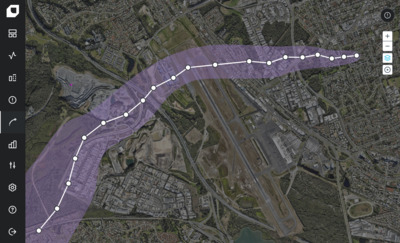
Environmental Intelligence systems such as Envirosuite’s EVS Omnis platform are allowing waste operators to better manage community complaints.

ESG encourages performance above minimum levels

2020 was “a watershed year” for environmental, social and governance (ESG) disclosures by businesses, but the broad consensus is more can be done to demonstrate commitment to the cause. ESG puts a company’s sustainability credentials on show. It drives companies to do more than the minimum when it comes to meeting the environmental conditions of their permits. When companies do more and publicise it, regulators are able to observe and take notes on where industry leaders are headed. This is reflected in revised permit requirements, raising the standards of the entire sector.

Tech mitigation has come in leaps and bounds

Over the past five years we’ve seen a significant change in the technologies available for odour detection. Only a decade ago, odour detection and management required specialist precise equipment. Now, operators can use small, cheap sensors and low-power communications for the same purpose. Data collected from these devices can be transmitted to a central point and run through environmental intelligence platforms to identify patterns and uncover insights that can inform interventions, such as misting controls, covers, methane management and other onsite mitigation techniques.

Bringing it all together

Sustainable landfill operations stand on three pillars — environmental compliance, optimisation and community engagement. As cities sprawl and communities come into closer proximity with waste sites, sustainable operations have never been more critical.

Envirosuite provides environmental intelligence tools that enable operators to comply with permitted conditions, optimise odour mitigations.

Envirosuite provides environmental intelligence tools that enable operators to comply with permitted conditions, optimise odour mitigations and hold conversations with government agencies and communities that build and engender trust in the handling of environmental concerns.

Learn more here about how to simplify and improve community engagement and reporting at your facility.

*Alex Zamudio, Environmental Intelligence Advisor, is Envirosuite’s leading Advisor in the Eastern USA region, helping organisations in waste, wastewater and industrial operations transform their business and increase value-creation across the board through environmental intelligence. Alex has over 15 years of experience helping clients succeed through digital transformation and continues to drive Envirosuite’s growth in the region by providing operators with intelligent tools that help them maintain their social licence and increase operational efficiencies.

Top image credit: ©stock.adobe.com/au/lumerb

source http://sustainabilitymatters.net.au/content/waste/article/what-does-esg-and-urban-growth-mean-for-waste-operators–39148952

Biofeed Separator food waste management technology

The Biofeed Separator is an innovative, scalable and proven food waste management technology that sustainably closes the loop on all types of food waste. The self-contained, organic food waste management unit is designed to convert solid food waste into a liquid using Biofeed’s patented maceration and separation process. This process is virtually odour-free, and the excess liquid is safely disposed of through existing public wastewater treatment systems. The residual material containing its original calorific value is then repurposed into numerous environmentally and financially beneficial alternatives. The technology is simple and scalable and can help to contribute to the user meeting triple bottom line commitments — profit, people and planet.

Benefits of the system include: contributes to meeting triple bottom line requirements; data capture option accessible through the cloud-based client portal; robust, scalable, low-maintenance technology; eliminates odour issues; compact size allows for easy installation in most areas and frees up valuable space; and 100% Australian made and owned.

source http://sustainabilitymatters.net.au/content/waste/hot-product/biofeed-separator-food-waste-management-technology-1336285829

Waste-to-energy system to launch in Brisbane

Finn Biogas is set to launch the Firefly MMAD_05, a miniaturised modular anaerobic digestion system that can take organic waste and turn it into power and heat.

Last year, the company received a $1 million grant towards its development as part of the federal government’s Business Research and Innovation Initiative (BRII).

The platform uses a combined heat and power (CHP) generator to produce power from waste and has an integrated SCADA system control panel to allow for the automation of the process. Different modules can be used for generating biogas or compost.

“Through innovative technology, we are optimistic that together we can make waste work and embrace a brighter future and circular economy through restorative and regenerative energy,” said the company’s founder and managing director, Jason Hawley.

“Organic waste management is already highly developed at an industrial scale; however, it is difficult to manage at an urban scale, as waste generally comes in small volumes and is segregated across the city.

“The design of our MMAD system is tripled layered and provides both social and environmental benefits, including the diversion of waste from landfill, a reduction in greenhouse gases and the production of nutrient-rich fertiliser which would have otherwise gone to waste.”

Food waste is often mixed with general waste, which can potentially cause risks to health and needless greenhouse gas emissions. The MMAD system is intended to divert this food waste from the landfill and process it into energy and fertiliser, the latter of which can be used for green spaces. It benefits from local councils providing and collecting food organics garden organics (FOGO) bins, which can be directly processed by the technology.

“As our system turns waste into energy and nutrient-rich fertiliser, councils will be able to have their own MMAD system — thereby creating their own energy to use within the community.”

A collection of the MMAD systems working together across five precincts would be able to prevent about 1000 tonnes of waste from entering landfill and almost 2700 tonnes of CO2 emissions from being released.

“Scaled across Australia, we could divert up to 21,000 tonnes of waste from landfill and mitigate approximately 55,000 tonnes of CO2 equivalent emissions — in just one year.”

The system is being developed as part of the ‘turning office trash into energy treasure’ challenge led by the Australian Renewable Energy Agency (ARENA) and is expected to be launched within the next six months.

Image credit: ©stock.adobe.com/au/uliab

source http://sustainabilitymatters.net.au/content/energy/news/waste-to-energy-system-to-launch-in-brisbane-778468268

MOVIGEAR with the times

As sustainability becomes a more dominant topic in today’s industry, it is now a more measurable focus in the present social, economic and environmental arenas. It is therefore important for businesses to move forward and be in alignment with such subsequent topics as, footprint reductions, operational efficiencies and optimization of resources. From a drive system perspective, this need for alignment can be made possible with SEW-EURODRIVE’s mechatronic drive system and solutions, setting new standards for efficiency and functionality.

The MOVIGEAR Performance as a mechatronic drive unit has several advantages over traditional drive solutions. This was the first product in the MOVI-C modular automation system designed for decentralized installation. It combines three core products into a fully serviceable, lightweight but compact housing: gear unit, permanent magnet motor and inverter. Integrating these components extends the product’s overall efficiency, capability and reliability; it combines the technical and practical advantages of all three drive components.

With MOVIGEAR, you can achieve energy savings of up to 50% in comparison to a traditional drive system. This is made possible by utilising the highest motor efficiency class IE5 to IEC TS 60034-30-2 and maximum system efficiency to IEC 61800-9-2. These features make the MOVIGEAR mechatronic drive solution a highly efficient, energy-optimized complete solution.

Typical areas of application for the new product portfolio include conveying applications in the food and beverage industry, intralogistics/parcel logistics, and airports.

For more information on MOVIGEAR, click here.

source http://sustainabilitymatters.net.au/content/sustainability/sponsored/movigear-with-the-times-28618186

Measurement technology in pressure sewage system

Melbourne’s sewerage system is a system of over 3,000km of pipes and pumps that are managed by various agencies. These systems safely transfer sewage from homes and businesses to treatment plants for processing, and they are important to the health of the city. The sewage strategy explores how this system is managed to protect the environment as well as safeguard essential rainwater-treatment systems across Melbourne’s metropolitan area.

Victoria’s sewer and sewerage treatment facilities have had to adapt and change to keep up with the city’s increasing population which is set to double by 2050. Rapid growth is expected in the north and west of Melbourne. The increased population will also mean increased demand for pressure sewage services. However, as the city becomes more populated and hotter, with rainfall expected to go down, intense storms are more than likely to be frequent, and warmer sewage temperatures will increase the rates of odour, corrosion and clogging of pipes.

Treatment and management of municipal wastewater have shifted towards pressure sewage systems from the conventional gravity sewage system. Wastewater management through pressure sewage systems offer lower installation charges, minimise the infiltration of groundwater, and mitigate the environmental and health hazards associated with gravity sewers. However, there are challenges in the control and monitoring of the amount of wastewater to be processed in the plant. Pressure sensors are used to capture the real-time data, but they must be able to reliably measure in this corrosive environment.

Reliable monitoring of the wastewater level not only ensures timely processing of waste without stressing the process, but also prevents the sewage overspill which is environmentally hazardous. Therefore, monitoring systems must be installed at strategic locations such as having the right kind of pressure sensors linked up with real-time alarms on the system. This enables operation teams to remotely monitor the process in real-time and be alerted if anomalies occur. The team will be able to investigate the problems and issue advanced warnings to the maintenance team if they need to fix the system. Pressure monitoring systems play an integral role in ensuring high deliverability in the pressure sewer systems.

General pressure sensors can be used to design systems for real-time control and monitoring in the pressure sewage system, as long as the sensors can measure the required level. However, users should also ensure that the sensors can return reliable measurements continuously. As the process media in the sewer systems contains many types of aggressive materials, users need to ensure that the sensors can be used for long-term operation in this challenging environment as regularly replacing broken sensors costs a lot of investment.

Controlling Volume of Treated Wastewater

In the pressure sewer system, municipal wastewater is collected in the local collection / holding tanks. Pump is installed to periodically transfer the wastewater to the processing plant.

The sewage level in the holding tank must be controlled to ensure that the tank contents do not overspill which will cause environmental hazards. Pressure sensors are used to monitor the level of wastewater in the sewage holding tanks. The sensors are installed in all sewage tanks in the municipality. This gives the operators real-time information about the sewage levels. The sensors form part of the chain in the measurement system to control the volume of wastewater to be treated.

An example of real-time applications would be the system pump from the tank that is almost filling. This can be done automatically or remotely controlled by the operator from the main control room. For this system to be successful and reliable, the engineering of this measurement system must utilize pressure sensors that can reliably measure in a sewage environment continuously.

Selecting Pressure Sensors for Sewage Monitoring

While there are several types of pressure sensors, each engineered for a specific function, you can make the selection on the basis of whether or not the sensor is subject to extreme conditions, whether or not chemical substances directly interacting with the sensor may affect its functionality, and whether sensor construction is ideal for the specific application.

  1. Compatibility with Process Media
    A pressure sensor is lowered to the bottom of the sewage tank and connected to a control system at the top of the tank. Its job is to continuously monitor the level of the wastewater in the well and provide accurate data. It continuously monitors the pressure of wastewater during the pumping process and the pump automatically turns off when the pressure sensor indicates that the level has reached the pre-set low or high level.

    During its service life in the sewage system, a pressure sensor will come in contact with several kinds of media such as grease, suspended particles, mineral build-up, tree roots, fats, carbohydrates, a mixture of gases such as hydrogen sulphide, ammonia, methane, esters, carbon monoxide, sulphur dioxide and nitrogen oxides.

    Therefore, when choosing a pressure sensor for a pressure sewage system, it is essential to check whether or not the product has been designed and manufactured with materials that can withstand harsh process media. Also, ensure that the diaphragms and welds should be strong enough to hold on under pressure and different process media, while fittings must have excellent resistance to leakages of any kind.


  1. Environmental Conditions
    The environment in a pressure sewage system is highly corrosive with biological contaminants such as sulphate reducing bacteria which significantly reduces the pH of the wastewater. Considering a pressure sensor for a sewage system is in constant contact with the corrosive wastewater, it raises the concern of decreasing the effectiveness of the sensor, even to the point where it will fail over time.

    Therefore, a measurement system which can withstand the harsh conditions specific to sewage must especially be used in the pressure sewage system. Considering it will act as the control parameter across the process, sensors that can withstand low pH levels should be used.

    To perform optimally while dealing with outside pressure in these environmentally-challenging conditions, it is important that the pressure sensor is constructed from a durable material that can withstand corrosion and other atmospheric uncertainties of pressure sewage systems. For such applications, choose the ones with pressure fittings made from highly corrosion-resistant stainless-steel materials.


  1. Process isolating diaphragm
    A pressure-sensing diaphragm is a circular piece of material that is positioned around the edge and exposed to the pressure media on one side. When pressure is applied to one side, such as by a gas or fluid, the diaphragm will flex and give way to the force. This movement of the diaphragm depends on the magnitude of the applied pressure.

    Since the pressure sensor diaphragm is constantly exposed to process media, it can clog or cause the sensing element to become highly contaminated, leading to inaccurate results. This eventually causes the operation to fail, causing the surrounding environment to overflow with hazardous contaminants.

    A process isolating the diaphragm addresses this problem of the clogged or contaminated sensor, by separating. It enables the pressure to come in contact with a flat membrane by leaving no pressure hole in the test head. This eliminates clogging or contamination of sensor elements by the process media. The flush membrane structure is adopted in such applications that have excellent media compatibility. In a flush mount, there is no recess that can become clogged, causing process failure.


Apart from the above-mentioned considerations, you must also address hazardous area certifications of the pressure sensor before making a decision. Relevant approvals for hazardous media sensors can include IECEx, ATEX, CSA etc.

Not considering the vital elements that can affect the performance of a pressure sensor is the reason why incompatibilities occur and the problems that stem from them. Selecting the right pressure sensors requires an understanding of the system requirements while considering the aforementioned points. It helps to narrow down the ideal sensor for the pressure sewage system that will give accurate results.

Combining more than 40 years of industrial experience, engineers at Bestech Australia provide rich expertise in modifying and customizing sensors for tailor-made high-precision testing applications. Modifying the pressure sensor for the pressure sewage system, incorporating design and material that can withstand the pressure and corrosive nature of process media are employed in the sensor manufacturing stage to optimise the operation.

Bestech Australia has established successful partnerships with researchers and local manufacturers to support all their testing and measurement needs. The company provides full local technical support from system design, testing and commissioning. We established a long-standing collaborative relationship with all our suppliers and combined this partnership with its local expertise to back local manufacturing and testing capability.

Image credit: ©stock.adobe.com/au/VIEWFOTO STUDIO

source http://sustainabilitymatters.net.au/content/wastewater/sponsored/measurement-technology-in-pressure-sewage-system-1383351032

Capacity mechanism report released

The Energy Security Board (ESB) has released a report outlining its potential approaches to a capacity mechanism for the National Energy Market — that is, a means of guaranteeing that electricity supply is sufficient by paying providers to have the necessary capacity for the network’s needs.

The capacity mechanism is a response to Australia’s changing and increasing energy needs; more power is predicted to be needed in the future and the country is adopting more forms of renewable energy that inherently have variability in their power generation abilities. In order to guarantee that the electricity network can provide power to consumers at all times as required, the capacity mechanism would see energy producers being paid to keep the network powered, to cope with increased demands and cover gaps from the production of renewable energy.

The Australian Solar Thermal Research Institute (ASTRI) and the Australian Solar Thermal Industry Association (AUSTELA) welcomed the report. They said that if the capacity mechanism was implemented with a particular focus on renewable energies, it would serve as a way to incentivise investment in sustainable and low-emission renewables.

Particularly, it was suggested that concentrated solar thermal power (CSP) could have an important role in the capacity mechanism as it would be able to supply power at night without producing emissions. This method of power generation sees sunlight converted directly into heat during the day, with this heat stored for later use. When energy capacity is required, the heat would be used to spin electricity-generating turbines to produce power.

ASTRI and AUSTELA argue that CSP would be able to complement and enhance existing solar energy and wind systems by providing energy at times when wind or sunshine is not able to generate electricity. This would mean that renewables can provide power at all hours of the day, without the use of fossil fuels for generation. In their response to the ESB report, ASTRI and AUSTELA said they believe without the use of technologies like CSP, it will be impossible to both decarbonise and produce sufficient energy.

The Energy Security Board’s discussion report on the capacity mechanism is available online.

Image credit: ©stock.adobe.com/au/Kushnirov Avraham

source http://sustainabilitymatters.net.au/content/energy/news/capacity-mechanism-report-released-1594863929

Reverse logistics: solutions for end-of-life products

Ecycle Solutions leads the way in innovative recycling solutions for Expanded Polystyrene (EPS) waste, battery recycling and e-waste in Australia, providing the general public and small business with a FREE collection & recycling solution for their end-of-life televisions and computers (e-waste) as part of the National Television and Computer Recycling Scheme (NTCRS), whilst recycling non-contaminated EPS and end-of-life batteries.

As Australia’s largest NTCRS Co-Regulator, Ecycle Solutions offers the general public and small businesses an avenue to recycle their end-of-life products through its 300+ permanent collection locations, which resulted in over 16,900 tonnes of e-waste being recycled in 2020/2021. This recycled e-waste has helped to achieve a recovery of more than 90% of reusable materials, equating to 16,300 tonnes being utilised as raw material to manufacture finished goods.

Ecycle Solutions is passionate about improving Australia’s environmental footprint offering a free e-waste collection service. Partnering with some of Australia’s largest electrical retailers, such as Harvey Norman, Betta Home & Living, Good Guys and JB-HIFI, it offers an extensive network of easily accessible drop off locations for the disposal of e-waste without any commitment to purchase in store.

All brands and models of compliant e-waste are accepted as part of the program, such as TVs, computers, laptops printers, hard drives, keyboards & computer peripherals, and working closely with certified recyclers all collected items are destroyed responsibly and securely, ensuring consumer confidence.

Since its inception in 2012 Ecycle Solutions has grown and expanded its recycling service to include expandable polystyrene, and as of January this year now includes the collection of end-of-life batteries.

EPS packaging is a lightweight, rigid, cost-effective packaging solution that can take in excess of 700 years to break down in landfill. As Australia’s largest recycler of EPS, Ecycle Solutions is a ‘one stop shop’ for the collection and recycling of EPS, avoiding this packaging waste from ending up in landfill.

Through hot press extrusion process, the collected EPS is recycled and then repurposed into a range of household items such as outdoor furniture, picture frames, skirting boards, just to name a few. Annually, Ecycle Solutions collects and recycles enough EPS to fill the Sydney Cricket Ground, diverting this waste stream from landfill.

In January 2022 Ecycle Solutions was appointed as an Accredited Collector for Battery Stewardship Scheme. The Battery Stewardship is an industry-led initiative providing a free battery collection and recycling service to all Australians.

Australia imports approximately 17,500 tonnes of batteries every year with less than 10% of household batteries currently being recycled, where most end up in landfill. The Battery Stewardship Scheme (B-cycle) is focused on reducing the number of batteries that go into landfill, by recycling and repurposing the reusable materials, and ultimately reducing the reliance on non-renewable resources.

Working together with Lions Australia, Ecycle will facilitate the collection of household batteries eventually from all 1200 Lions Clubs nationally. The rebate received by Lions as part of the B-cycle scheme will be used to fund local community projects.

Ecycle Solutions is excited to extend their recycling services to include the collection of batteries and provide the public with another avenue to recycle end-of-life products into reusable materials and reduce the use of non-renewable resources.

As a wholly owned subsidiary of the QLS Group, Ecycle Solutions has a unique competitive advantage through utilising reverse logistics when it comes to recycling, by servicing regional & remote locations more effectively than its competitors.

To find out more about Ecycle Solutions’ recycling solution contact Chris Tangey, General Manager on +61 419 510 596.

source http://sustainabilitymatters.net.au/content/waste/sponsored/reverse-logistics-solutions-for-end-of-life-products-1601793779

Overcoming challenges in CCUS operations

Carbon capture, utilisation and storage (CCUS) is the process of capturing carbon dioxide (CO2) emissions at the source, or directly from the air, and preventing them from entering the atmosphere. Once captured, CO2 is then purified, liquefied and transported to a suitable storage location for long-term isolation from the atmosphere or utilised in a variety of industrial products.

The process of capturing carbon dioxide has been used within gas processing for decades to remove CO2 from natural gas to improve purity. Since the 1970s, captured CO2 has been injected into oil fields and utilised to enhance oil recovery. In more recent times, capture technology has been successfully coupled with underground injection and sequestration of CO2.

Emerson has decades of experience in engineering, operating and optimising industrial facilities, providing the foundation for its expertise in CCUS. Emerson understands the unique challenges posed by the needs of CCUS operations.

In Australia, Emerson has been involved in a major carbon capture project, working with the engineering contractor and end user from the early-stage front-end engineering design (FEED) stage to follow best practices in providing instrumentations required in different sections of the plant for critical measuring points and applications, while also enabling full automation of the plant.

CCUS challenges

The deployment of carbon capture and storage involves substantial capital and operational costs, presenting challenges to its commercial viability:

  • Cost of implementation and operation: The upfront capital investment for capture technology, transport pipelines and geological storage is high, and significant energy and water usage is required to capture and compress the CO2.
  • Transportation challenges: New infrastructure is required to safely carry liquefied CO2 to storage or utilisation sites, and significant energy is also required to compress the CO2 and to maintain high pressure and low temperature throughout the pipelines.
  • Custody transfer: Reliable methods are needed to precisely measure large volumes of CO2 transferred between producers and consumers, as well as for reporting carbon tax credits and regulatory compliance.
  • Emissions challenges: Impurities in the CO2 stream, including water, can result in dangerous leaks and explosions as the compressed fluid rapidly expands to a gas.
     

Accurate instrumentation of the entire CCUS process is imperative to maintain safety and minimise operational costs.

The carbon capture process

Post-combustion amine-based absorption is the most mature carbon capture process. It consists of an absorber, where a chemical solvent captures CO2 from the flue gas, followed by a stripper where the chemical solvent is regenerated and the CO2 is extracted.

CO2 capture efficiency is dependent on the solvent circulation rate. By increasing the circulation rate, the energy required for the stripper reboiler is increased. There is a trade-off between the capture efficiency and energy cost to regenerate the solvent. The greatest challenge is to meet the targeted CO2 capture rate in an efficient manner.

Liquefaction efficiency

Liquefaction is an essential process for long distance transportation of CO2 and consists of a series of compressor stages and cooling. Efficiency of the liquefaction process depends on reliable measurement and control. CO2 must be compressed to a pressure between 1,500 and 2,200 pounds per square inch (psi) for pipeline transportation. Compressors are key assets used across all phases of CCUS, with unexpected failures resulting in capacity outage, equipment damage, excessive maintenance and costs, and scheduling delays.

Maintaining CO2 in its liquid state is critical, but it has proven to be difficult. CO2 purity is important to maintaining a single phase without requiring extra energy. Impurities and humid conditions can cause the formation of dry ice, which result in corrosion and potential leaks.

Loss of containment

A leak, as a result of corrosion and erosion, is a significant concern during all stages of the CCUS process. In an amine carbon capture unit, carbonic acid attack is possible where water vapour condenses in the presence of CO2. Two-phase flow at the feed to the stripper also results in erosion concerns. Sheer rates, turbulence and steam velocities are also key for corrosion and erosion control. Within liquefaction, water content in CO2 can also lead to corrosion-based leaks and must be controlled.

CCUS Instrumentation Solutions

As for any industrial process, the success of a CCUS project depends on the accurate measurement of critical parameters throughout the process.

Accurate flow and phase measurement

At all points in the CCUS process, accurate measurement of the flow and density of the CO2 is essential. Volumetric flow measurement will be difficult due to the changes in CO2 phase and density. Direct mass flow measurement is the best option at these critical measuring points. Emerson’s portfolio of mass flow devices using Coriolis metering technology provides reliable CO2 measurement data in critical applications throughout the capture process.

The Coriolis meter’s ability to measure multiple variables, such as mass flow, density, temperature, drive gain (an indicator of phase fraction conditions) means that it is possible for these meters to continue measuring with entrained liquids in gas. This type of measurement works by combing data from the meter with readily available process variables, such as density of liquid and gas at standard conditions. It is possible to detect the presence of entrained water in the CO2 stream, so that action can be taken to mitigate the risk of corrosion.

In the amine unit, Coriolis density meters also help to automate lean amine concentration measurement to determine solvent circulation rate to achieve the desired capture efficiency at the lowest cost.

Emerson’s Micro Motion high-pressure Coriolis meter

Emerson’s Micro Motion high-pressure Coriolis meters work reliably at the required pressure and no straight pipe run is required. This results in a compact custody metering skid, reduced engineering complexity and lower materials cost in the building of the CCUS system. The integrated metering skid complies with international custody transfer standards and has the accuracy suited for carbon credit trading purposes.

Temperature measurement

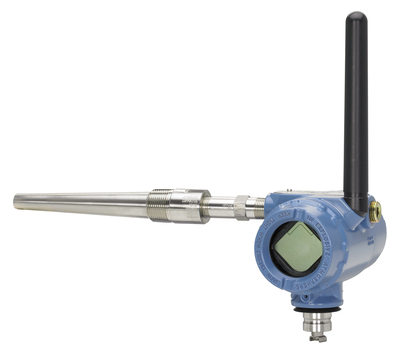
Throughout the entire process of carbon capture, liquefaction and transport, temperature is a key property of the CO2 that must be managed. Traditionally, accurate measurement of temperature requires the installation of thermowells into the process fluid streams in order to bring the temperature sensor in contact with the fluid; however, this method of measurement is complex to design and install, and increases the risk of process leaks — potentially defeating the purpose of a CCUS project.

Emerson’s Rosemount 3144P Temperature Transmitter

Emerson’s Rosemount X-well Technology provides an accurate, reliable and non-intrusive temperature measurement at a lower cost while reducing the risk of process leaks by making it possible to achieve accurate process temperature data without the need for thermowell or process penetration. Using a thermal conductivity algorithm with an understanding of the conductive properties of the temperature measurement assembly and piping, this surface temperature sensor solution accurately measures internal temperature. This ensures the efficiency and safety of the CCUS process and the proper state of gases and liquids are maintained during processing, transport and storage.

Gas analysis

Depending on the process from which the CO2 is being captured, various types of impurities other than water may be present in the gas stream.

Emerson’s Rosemount CT5800 Continuous Gas Analyzer

Concentration and composition measurement of the CO2 purity and its impurities during the carbon capture process as well as further down the value chain are also important. Emerson’s gas analysers based on Quantum Cascade Laser technology offer fast, high-resolution spectroscopy measurements that provide near-live data and trend information for operators. This visibility into the process allows operators to take quick action if the impurity levels exceeded the required data set points.

Carbon capture success through automation

In the Australian CCUS project, Emerson was able to provide, along with critical instrumentation technology, the complete automation solution for the successful implementation of carbon capture, utilisation and storage.

Emerson’s advanced automation technologies, designed specifically to monitor and control the CCUS process, have helped the Australian CCUS project to ensure operational certainty by delivering advanced control, increased process visibility and actionable information for improved decision-making.

For more information, visit here.

Top image credit: ©stock.adobe.com/au/immimagery

source http://sustainabilitymatters.net.au/content/energy/sponsored/overcoming-challenges-in-ccus-operations-236737627

Black & Veatch joins Australian Hydrogen Council

Black & Veatch (BV) has joined the Australian Hydrogen Council (AHC), the peak body for the hydrogen industry in Australia. The international engineering group is working to push hydrogen as a viable means of achieving zero-emissions energy and said that it sees potential for Australia to supply the environmentally friendly fuel.

“Hydrogen and ammonia will be critical factors in decarbonising the world’s energy systems, supply chains and heavy industries,” said Mick Scrivens, Vice President, Director, Australia Pacific, Black & Veatch.

Hydrogen can be used as a replacement for fossil fuels in energy generation and long-term storage, and can be used in heating, transport, production of green chemicals and fertiliser. It can also be turned into green ammonia, produced without the emission of carbon. Ammonia, which is primarily composed of hydrogen, is energy dense and can be used as way of generating electricity or as an energy storage medium without the environmentally harsh emissions of fossil fuels.

Analysts have predicted that Australia will be the source of 10% of carbon-free ammonia by 2035.

“Black & Veatch has an 80-year history working with hydrogen and ammonia production in multiple industries. With expertise in all stages of hydrogen infrastructure projects — from technical advisory services and design through operations — we continue to support global decarbonisation programs, including those in Australia,” said Scrivens.

AHC CEO Dr Fiona Simon said one of the AHC’s strengths was its broad membership, including large global firms like Black & Veatch as well as smaller entities.

“As a leading advocate in countries across the globe of decarbonisation through transitioning to hydrogen, Black & Veatch brings further knowledge and experience to our membership and we are delighted to have it on board,” Simon said.

Image credit: ©stock.adobe.com/au/malp

source http://sustainabilitymatters.net.au/content/energy/news/black-amp-veatch-joins-australian-hydrogen-council-878761626

Lighting up water treatment in Happy Valley

Operating for more than six months, Xylem’s ultraviolet disinfection system has kept pathogens at bay to protect the supply of safe, clean drinking water for nearly half a million South Australians.

Commissioned in December 2021, the system was retrofitted to SA Water’s Happy Valley Water Treatment Plant as part of a $26 million upgrade to ensure the utility’s continued compliance with Australia’s world-leading drinking water standards, while enabling community access to green open spaces.

Four reactors with a combined 624 ultraviolet (UV) lamps enable the system to treat up to 600 ML of water each day instantaneously — designed with additional treatment capacity to maintain network flexibility and support demand changes.

SA Water’s Senior Manager of Capital Delivery Peter Seltsikas said secondary disinfection with ultraviolet light provides an additional layer of water quality protection against potentially harmful pathogens.

“Our new UV disinfection system at Happy Valley is another line of defence protecting the quality and safety of our largest drinking water supply to metropolitan Adelaide, while enabling kayaking and fishing at the adjoining reservoir,” Seltsikas said.

“Pathogens come in a range of forms and can be found naturally in water sources. The catchment area that supplies Happy Valley Reservoir, via Mount Bold Reservoir, is significant and covers the Mount Lofty Ranges.

“From a water quality perspective, this particular catchment is challenging given the presence of agriculture, so there’s an ever-present risk of pathogens, such as cryptosporidium, finding their way into our reservoirs.

“To manage these risks, our Happy Valley Water Treatment Plant adopts a series of conventional treatment processes including coagulation, flocculation and filtration to trap and remove dissolved organic matter or other solid particles.

“Disinfection of the water with chlorine occurs after filtration, to destroy any microorganisms that may not have been captured, however cryptosporidium can be resistant to chlorine and evade treatment.

“When pathogens like cryptosporidium and giardia are exposed to and absorb the high-powered ultraviolet light, it destroys their structures and inactivates the microorganisms’ cellular function.

“Each reactor has 13 independent rows of 12 UV lamps, which are automatically operated and are capable of turning themselves off based on the instantaneous treated flow and incoming water quality.

“The lamps are powered by the latest electronic ballast technology — regulating the lamps’ output from 50 to 100% — and harness a sophisticated UV intensity sensor that significantly reduces energy consumption.

“These two features make it one of the most energy-efficient UV systems, and when combined with our solar array at Happy Valley capable of producing more than 17,000 megawatt hours of energy per year to help power the wider plant, ensures we’re meeting the system’s energy demands and operating it sustainably.”

More than 200 people worked on the project across SA Water and its construction partner, John Holland Guidera O’Connor joint venture, with 60 full-time employees working onsite at the height of construction.

source http://sustainabilitymatters.net.au/content/wastewater/case-study/lighting-up-water-treatment-in-happy-valley-972998898