Circular Transition Award winner announced

MCi Carbon has won The Banksia Foundation’s Circular Transition Award at the 34th National Banksia Sustainability Awards, recognising its carbon capture and utilisation (CCU) methods achieved at the Pilot Plant Facility in Newcastle. The National Banksia Sustainability Awards seek out and recognises innovation and leadership through the lens of the United Nations’ Sustainable Development Goals (SDGs).

By using a chemical engineering process called mineral carbonation, MCi creates inputs into building materials and other products using captured industrial emissions. The company’s technology reacts CO2 from steel, cement, fertilisers and mining facilities with mineral by-products of industrial processes, such as steel slag and mine tailings to divert carbon dioxide from entering the atmosphere. MCi can then create carbon neutral and negative emissions calcium and magnesium carbonates, amorphous silicas, and other inputs for a range of applications in the circular carbon economy.

Following the award of a $14.6m Australian federal government grant to build a mineral carbonation demonstration plant, the company has grown significantly. In February, MCi announced a multimillion-dollar investment from RHI Magnesita and signed up the Austrian company as its first global commercial customer. In March, Mizuho Bank invested US$5m, recognising that development and social implementation of CCU technology is necessary to achieve carbon neutrality in hard-to-abate sectors.

Banksia Foundation CEO Graz van Egmond said the award winners were drawn from a record number of entries, demonstrating optimism and hope for a brighter future despite fears for the economy in the short term. He labelled them as “Australia’s brightest leaders” in making a positive impact.

MCi Carbon’s research Pilot Plant is where the team conducts intensive industrial programs to refine the mineral carbonation process, deliver customer projects and generate low-carbon materials for product testing. MCi has also won the NSW Clean Technology Award, presented by the Banksia Foundation.

The plant is located at the University of Newcastle’s NIER facility and it reacts industrial emissions with feedstocks to create both carbonates and silica by-products for use in building materials, such as concretes and plasterboards.

source http://sustainabilitymatters.net.au/content/sustainability/news/circular-transition-award-winner-announced-1313192451

Go for Zero: call to recycle old mobile phones

Go for Zero is a campaign that calls for old and broken mobile phones and accessories to be sent in for recycling.

The campaign is endorsed by the Hon Tanya Plibersek MP, Minister for the Environment and Water.

“I hope this campaign encourages everyone to hunt around at home and find their old, unusable phones which can be taken to be recycled. The Australian Government is working towards a circular economy, and programs like MobileMuster are helping us to get there,” Plibersek said.

Mobile phones might feel as though they have been part of our lives for so long, but it has only been a few decades. In 1990, only 1% of Australians owned a mobile phone, but by 1999 this had increased to 45%. Today, following IT innovations and technology developments, 9 out of 10 Australians own a smartphone, with millions of phones being replaced and upgraded each year.

As much as Australians love the new, the old has to be dealt with. As the mobile phone business grew in Australia, large telecommunications companies (Nokia, Motorola and Telstra) came together to create and fund a product stewardship program called The Mobile Phone Industry’s Recycling Program. The program started in 1998 and has since been renamed MobileMuster — celebrating 25 years of the program this year. The scheme manages products through their full life cycle and is offered at no cost to the community.

Manufacturers have also shifted towards being more environmentally conscious, now making phones that are 95% recyclable. Using MobileMuster, one in three Australians have recycled an old device or accessory; however, IPSOS research has estimated that there are over 26 million phones that aren’t being actively used sitting around in Australian homes, 5 million of which are completely broken and unusable. MobileMuster aims to target this number in its annual Go for Zero campaign.

Astrophysicist and Swinburne professor Alan Duffy is Go for Zero’s Ambassador. He said MobileMuster has recycled over 2000 tonnes of mobile phone waste in the past 25 years, but there’s more to be done.

Image credit: iStock.com/antos777

source http://sustainabilitymatters.net.au/content/sustainability/news/go-for-zero-call-to-recycle-old-mobile-phones-1087020783

Customers investing in SolarEdge inverter solutions have made a smart choice

SolarEdge systems enable customers to access additional revenue streams either by participating in Virtual Power Plant (VPP) offers, or through SolarEdge’s ability to meet new regulations for dynamic export.

Additional revenue means improved Return on Investment (ROI)

SolarEdge customers have access to a range of features and capabilities that can help them accelerate the ROI of their solar energy systems by optimising energy production, participating in new revenue-generating programs, and improving system reliability. We call these services SolarEdge Grid Services (GS). By utilising SolarEdge GS, customers can achieve a faster return on their investment and generate more revenue from their solar energy systems.

GS works as a cloud-based service immediately available on SolarEdge installed systems when internet communications are established. GS deliver the opportunity for many sites to work together and access new revenue generating programmes such as energy market participation, demand response and data insights. These are the areas that create value and can be shared to end customers.

GS VPP’s are provided by SolarEdge’s energy retail, network services and aggregator partners. These services are facilitated via SolarEdge systems and only operate where customers choose to participate in a VPP offer.

Access comes directly through SolarEdge native solutions

SolarEdge hardware components installed at a customer’s home or business are ‘native’ GS systems, meaning customers do not need to purchase additional equipment and installers do not need to worry about integrating third party assets. This is important as the cost of installing third party assets is an expensive addition to the installation and can erode the value created from enrolling in VPP.

Native systems make installation easier and increase certainty of compliance for installers and solar retailers.

Access to exporting extra solar PV generation to the grid is changing

The ongoing success of solar in the energy system is driving unintended consequences, namely on days where solar generation is high, but load in the network is low and constraints can happen, potentially putting the grid at risk.

Networks are moving to put dynamic export limits in place, with the intention for all new solar systems to allow the network operator to remotely update solar systems’ grid export limits to help maintain grid stability where on some days the export limits are reduced. For example, in South Australia, the benefit to SolarEdge system owners is that for most of the year, they will be able to export up to six-times more energy back into the grid, compared to non-compliant sites which will be limited to small, 1.5 kW fixed export power limits.

SolarEdge is a leader in this space, being the first vendor to certify and offer this native dynamic export service in South Australia and confirmed on CEC listing.

SolarEdge’s smart inverters achieve this capability without the complexity and additional costs of adding third-party controllers.

SolarEdge solutions increase value today and into the future

SolarEdge Grid Services helps customers to access additional revenue from their renewable energy investment, accelerating ROI.

Our native systems deliver effective, diverse and valued services for customers, energy retailers, networks and aggregators alike. Native systems help installers on-site removing the need to install additional components and programme third party products together, while giving customers and aggregators the confidence for firm response rates during events.

SolarEdge is a global leader in smart energy technology. By leveraging world-class engineering capabilities and with a relentless focus on innovation, SolarEdge creates smart energy solutions that power our lives and drive future progress.

SolarEdge continues to work at the forefront of energy market needs in Australia supporting a successful transition to a clean energy system.

Image credit: iStock.com/Harlz

source http://sustainabilitymatters.net.au/content/energy/sponsored/customers-investing-in-solaredge-inverter-solutions-have-made-a-smart-choice-1043440460

Putting waste to good use: harnessing the power of biosolids

Not just a waste — a resource with more potential

The treatment of wastewater isn’t a new issue, but the way in which we dispose of the solid byproduct from the treatment process is an evolving affair. In densely urbanised areas, excess waste product is a prevalent issue, making transforming wastewater into a renewable source a necessary sustainable disposal solution. Wastewater sludge, once correctly treated, can create a major byproduct of solid mass called biosolids, which can be reused for applications such as fertiliser. It is achieved after wastewater sludge from domestic or industrial use has been properly treated to remove harmful bacteria and microorganisms, creating the fertiliser product. This solution is already in use amongst various farmers and agriculturists who turn to biosolids for its effectiveness over chemical fertiliser, due to its natural sufficiency of organic nutrients.

Image credit: iStock.com/fotokostic

Contaminants causing issues

A challenge facing biosolids is emerging contaminants. Artificial chemicals such as Per-and Polyfluoroalkyl Substances (PFAS) which are harmful to humans, end up in water largely via industrial surface runoff, landfill leachate or emissions. These contaminants are made from strong molecule bonds that are extremely difficult to breakdown, needing high temperatures to destroy them. It is also often cost prohibitive to break them down to a safer compound so that they can be re-used back into our food, agriculture and waterway ecosystems. And PFAS is not the only culprit, there are many new chemicals added to products we use every day and because they are new, their consequences often aren’t known until years later.

Technology to improve the way we create biosolids

The most effective way to break down PFAS is still improving with technology, but there are a couple of systems being utilised. Thermal processing is one method, which decomposes the PFAS via a range of incineration processes such as melting or boiling. Another common procedure is pyrolysis or gasification, which atmospherically gasifies dried sludge at a high heat level. While these methods are efficient in breaking down the PFAS, the downsides are that they also have the potential to remove some of the beneficial nutrients for the use of biosolids as fertiliser, reducing its capacity to a soil enhancer or similar. That being said, these options still allow for PFAS to be safely disposed while transforming the waste solids into a product that can be on-sold.

Image credit: iStock.com/MajaMitrovic

Multiple byproduct benefits from sewage treatment

As one product from wastewater treatment, biosolids’ direct uses are as fertiliser or soil improver. However additional treatment can result in higher value, innovative products such as syngas (fuel), biodiesel, biochar, bio-oil, phosphorous, struvite, biomethane, ammonia and hydrogen.

There are many emerging technological trends for processing biosolids to generate these products, including; pyrolysis/gasification, optimised anaerobic digestion, steam reforming for hydrogen production, biomethane production, sludge drying, thermal hydrolysis processing (THP) and nutrient recovery. Further research and strategic planning is required to determine the most suitable technologies and the most beneficial products (whilst also dealing with emerging contaminants), but the possibilities are numerous.

An emerging industry — a missing link to a circular economy

More and more projects are emerging that are taking the lead in transforming waste into byproducts. A biosolid hub has been developed at the Oxley Creek Sewage Treatment Plant (STP) in Brisbane, where biosolids are trucked in from other plants for further treatment and processing. Another hub is planned as part of an expansion at the Coombabah STP on the Gold Coast. Depending on site specific circumstances (e.g. distance between treatment plants), it is generally more efficient to create central hub infrastructure for these processes rather than using multiple biosolid processing plants.

SMEC has worked with Oxley Creek STP previously for their Steam and Biogas project, which was centred around maximising energy recovery and efficiency in the biosolids hub. The biogas from the digesters is used to generate electricity at the cogeneration. Prior to the upgrade the site boiler was running off natural gas, but now uses a mixture of biogas and natural gas to generate the steam required for the THP, therefore reducing natural gas consumption. In addition, previously the waste heat gas stream from the cogeneration was vented. Works involved replacing an existing waste heat boiler that utilised the energy from this waste stream to generate further valuable steam for the THP, reducing natural gas consumption further. Additional project works also involved adding an economiser heat exchanger to improve energy efficiency.

SMEC has also worked on strategy reports examining long term options for beneficial reuse of biosolids from treatment plants for water distributors in ACT and QLD. These reports both established long-term systems for managing biosolids using current and, as they become commercialised, other processes. The main driver was ensuring the quality of biosolids met the markets that were economically accessible.

Image is everything

Unfortunately, large parts of society still have negative connotations around ‘wastewater’ as there is reluctance to utilise a sewage byproduct to fertilise consumable items. However, as cities continue to expand, it is important to factor in renewable solutions for future developments. Currently there is a lot of planning in infrastructure for what is the most valuable way to treat and dispose of waste sustainably. If we could change the stigma around waste products to focus on its economic and sustainable potential, there is an untapped valuable market to harness.

Looking ahead: solutions with the end-product in mind

Looking towards the future of circular waste management, we can hope that development for centralised byproduct hubs will continue. Turning our sewage treatment plants into a place where sewage goes in and renewable products come out. And not just human waste, but co-digestion with food waste and other types of waste. This will also aid in reaching the global net zero target when biomethane, electricity and nutrients can be recovered from sewage.

We, as an engineering industry, have an important role to play in progressing the concept of a bio-refinery into reality and also in helping raise awareness of the benefits of waste, the stigmas that need to be challenged, and contributions we need to be making to transition to a circular economy.

Top image caption: Coombabah Sewage Treatment Plant.

source http://sustainabilitymatters.net.au/content/waste/sponsored/putting-waste-to-good-use-harnessing-the-power-of-biosolids-1550195442

Western Sydney set for major streetlight upgrade

Following an agreement with Endeavour Energy, seven Western Sydney councils will install 52,200 energy-saving LED streetlights, replacing older, less efficient ‘mercury vapour’ light bulbs.

Under the Western Sydney Energy Program, the rollout of LED streetlights is expected to save ratepayers more than $3.2 million in energy costs each year and reduce greenhouse gases by 14,000 tCO2

The councils participating in the program are Blacktown City, Blue Mountains City, Cumberland City, Hawkesbury City, The Hills Shire, Lithgow City and Liverpool City.

Andrew Pitman, General Manager of Business Services, Endeavour Energy, said the LED streetlights are up to 60% more efficient than mercury lights and can last up to 20 years.

“By using this new technology, we are able to provide more efficient and sustainable public lighting that will improve the safety of local communities while also saving ratepayers money,” he said.

Endeavour Energy is investing $50 million in the upgrade, which is expected to be completed by 2024.

The program is coordinated by Western Sydney Regional Organisation of Councils (WSROC).

Barry Calvert, WSROC President, said street lighting is a big part of councils’ electricity bill and any efforts to reduce costs will help redirect funding to other projects and infrastructure.

“The Western Sydney Energy Program is among the most ambitious street lighting replacement projects NSW has ever seen,” Pitman said.

source http://sustainabilitymatters.net.au/content/energy/news/western-sydney-set-for-major-streetlight-upgrade-1261869986

Compressed air for pet blow-moulding production

Measurement and recording of actual pressure flow inside the production equipment can assess the actual performance of the compressed air system. This identifies any areas where compressed air problems are causing limitations on productivity and quality of production, the improvement of which in turn can lead to lower energy use costs and increased production rates.

All blow moulding processes require stable compressed air pressure delivered to the moulding machine to control quality and maintain productivity. In most blow moulding processes, compressed air is used to inflate the parison, a tube-like piece of plastic with a hole in one end through which compressed air can pass. The compressed air also cools the part after inflation to final form, but prior to ejection from the mould.

In PET bottle blowing, high-speed machines use compressed air to produce bottles at rates of over 20,000 bottles per hour. The rate of pressure rise becomes dependent upon the pressure differential driving the flow from the air inlet of the machine to the cavity. The higher the inlet pressure the faster the rate of pressure rise.

Increasing the system pressure is a common way to maximise productivity and still produce good product. Unfortunately, higher pressure leads to wasteful artificial demand, elevated compressor energy and maintenance costs, and inefficiency in managing the system.

The real costs of higher system pressure

Blowing the part as quickly as possible leads to very high rates of flow in supply components creating high pressure drop. A blow machine running 24,000, 500 mL bottles per hour can consume 90 m3/min depending upon setup creating significant pressure drop in the headers and filters delivering the air. In order to make acceptable bottles with this level of pressure drop the system has to operate at dramatically higher than necessary pressure.

This higher than necessary pressure means each bottle requires a greater volume of air, and because the header pressure is elevated to increase the inflation pressure differential, the blow pressure continues to rise to higher than required pressure after the bottle is fully moulded. For every bar of pressure increase above the required blow pressure, the volumetric flow required increases by the volume of the bottle. For example, one bar in excess pressure for a 500 mL bottle times the production rate equates to 1.5 m3/min in artificial demand.

Higher maintenance and energy costs on the compressors

The most common compressor for achieving these pressures is a 3-stage reciprocating machine which uses valves to control the flow of air through the stages. At these higher pressures the temperatures are higher, increasing the stress and wear on critical components. Where it was possible to substantially decrease the discharge pressures, maintenance cycles are extended by as much as 25–30%. Power is also reduced at the lower discharge pressures by a ratio of 1% energy reduction for every 5% pressure reduction. A reduction of 700 kPa or 16% will mean about a 3% energy reduction at the compressors.

Capturing the efficiency opportunities

The first step in capturing efficiency opportunities is to minimise the pressure drop within the moulding machines, which normally requires removing and/or replacing pneumatic components with those of higher flow capability. The regulators and filters are critical items and must be examined closely by measuring the pressure drop while the machine is blowing bottles. Localised storage receivers can minimise pressure drop by supporting the very high rates of flow during each blow cycle with stored air. This storage must be located as close to the point of consumption as possible; for example, it must be tied into the pneumatic circuit after the filter and regulator to be of any value.

System management

Managing this level of pressure change requires significant modifications in the approach to system management. While compressed air storage tanks can be expensive, maximising the storage is essential with most compressed air systems as the lack of appropriate storage is even more costly if additional compressors are required to run part loaded to deal with the rates of pressure change.

An appropriate automation system which calculates the rate of pressure change and makes intelligent decisions regarding the appropriate supply-side response can make a significant difference in energy costs and reduce compressor cycling, wear and motor starts. Avoiding unnecessary compressor starts due to the rate of change can mean saving many thousands of dollars in energy costs per year.

Kaishan Compressors offers an assessment and advisory service for upgrading, replacement, design and installation of new systems to match production demands.

source http://sustainabilitymatters.net.au/content/energy/article/compressed-air-for-pet-blow-moulding-production-463728931

Innovative Technology Solutions Revolutionise Hydrogen Production

As the world becomes more aware of the urgent need to address climate change and reduce greenhouse gas emissions, industries are looking for ways to operate more sustainably. One promising solution is the use of hydrogen, a clean and renewable energy source that can be used to power a wide range of industrial processes. As a result, the hydrogen fuel industry is growing faster than ever before. We see more partners across the entire hydrogen fuel value chain, and you need expert suppliers who have the flexibility to meet a wide variety of designs and applications, from electrolysers to fuel cells. In this evolving landscape, enhanced technology, more profound expertise and a stronger commitment to value-creating solutions guarantee a market advantage.

Your trusted partner across the entire hydrogen fuel value chain

Emerson’s extensive portfolio of measurement, control and electrical equipment for hazardous areas is designed to address the quality and performance needs required by companies within the growing hydrogen fuel market. Working with brands, such as Appleton™, ASCO™, Fisher™, Micro Motion™, Rosemount™ and TESCOM™ means you can expect innovative, extremely precise and reliable products designed specifically for your demanding hydrogen fuel applications. In addition, this technology is backed by global support from industry experts who understand your reliability, safety and cost expectations.

Electrolyser

The biggest hurdle to overcome in scaling-up hydrogen production is achieving commercial viability or progressing towards the $2 /kg gold standard. After the reduction in the cost of renewable energy and the reduction in the cost of the electrolysers themselves, electrolyser efficiency improvement, increased stack life and loading hours present the greatest opportunity for opex reduction. This requires access to data facilitated by Emerson’s pervasive sensing strategy based on a range of WirelessHART instrumentation. This can then feed advanced digital twin solutions such as those from AspenTech to model remaining useful life and gain a better understanding of where the optimisation in performance and lifespan may be found.

Level Measurement

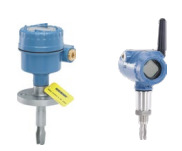
Reliable level measurements in the electrolysis of water ensure safe and efficient operations of the plant. Radar transmitters offer a maintenance-free solution with a high level of accuracy, resulting in improved product purity through proper separation of hydrogen, oxygen and water and minimal risk of ionising demineralised water.

  • Unmatched accuracy, reliability and ease of use.
  • Advanced diagnostics enable process insight and proactive maintenance.
  • HART®, Foundation Fieldbus and WirelessHART® connectivity.

Point Level Measurement

Rosemount Vortex flow meters are gasket-free, non-clogging instruments that eliminate downtime and maintenance costs associated with plugged impulse lines.

  • Isolated sensor allows for inline replacement, improving worker safety.
  • SIL 2/3 certified for Safety Instrumented Systems.
  • Dual and quad meters eliminate the need for multiple flow meters, reducing complexity and cost.

Fuelling Stations

As fuelling stations transition to hydrogen fuel, you are encountering more risk. Your customer wants to ensure they are dispensing the right amount of fuel and at the right pressure quickly and safely. Here are some solutions that can help you develop high-quality, precise, safe and easy to maintain fuelling station systems from the storage tank or tube trailer to the dispenser.

Flow Measurement

The Micro Motion High-Pressure Coriolis Flow Meter portfolio offers a wide range of pressure thresholds without compromising the integrity of the flow measurement reading and eliminates the need to utilise multiple devices. Designed with the challenges of high-pressure hydrogen in mind. Constructed with all stainless-steel wetted components to avoid embrittlement issues from high-pressure hydrogen. Offered in three different pressure ranges to meet the specific needs of both the hydrogen car and the bus and truck market.

Temperature Measurement

The Rosemount X-well technology provides precise temperature measurement that does not require thermowell or process penetrations, thereby eliminating potential leak points. This surface temperature sensor solution simplifies the process and reduces complexity. It is also easy to retrofit and requires less installation time.

High-Pressure Measurement

The use of Rosemount pressure transmitters in high-pressure applications ensures heightened safety and minimal downtime. These transmitters are designed to offer unparalleled reliability and accuracy, even in the toughest environments. The transmitters feature gold-plated SST diaphragms that provide protection against hydrogen permeation, further enhancing their durability and performance.

Fuel Cell

Hydrogen is an important energy source of the future and can be used to power passenger cars, commercial vehicles, drones and forklifts, replacing traditional heavily polluted carbon fuels and chemical battery power. It can also provide backup power supply for critical applications like data centres.

Here are some products that provide reliable and safe operation of any type of fuel cell, including PEMFC, PAFC, SOFC and MCFC. Compact and lightweight designs permit you to create high-power density systems. Robust and extremely reliable products mean longer life and reduced downtime.

Flow Control

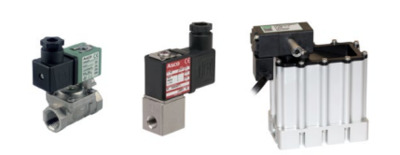
ASCO solenoid valves, both direct and pilot-operated, offer an excellent solution for regulating the flow of fuel from a storage tank to a fuel cell stack in vehicles. These valves are highly dependable, constructed with durable materials that ensure a prolonged lifespan and minimal internal leakage. They are pressure-rated up to 30 bar and can be equipped with an optional heating module to facilitate cold start-up conditions.

High-Pressure Hydrogen Control

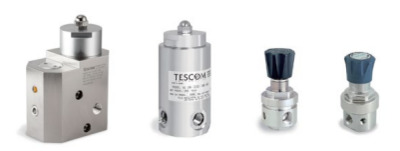
TESCOM Onboard Pressure Reducing Regulators are specifically designed for the challenges of delivering precise hydrogen pressure to on-vehicle fuel cells.

These designs are proprietary and feature a tight no-flow shutoff of pressure in various operating scenarios. Furthermore, these regulators have wide operating flow ranges that allow them to deliver consistent downstream pressure, even as fuel demand varies.

Achieve your desired operational performance through flexible service support

A strong partnership with an automation expert, such as Emerson, strengthens the position and long-lasting competitive advantage. It will give flexible support to meet the demands of an expanding hydrogen fuels market.

Please visit www.emerson.com/au/automation

source http://sustainabilitymatters.net.au/content/energy/sponsored/innovative-technology-solutions-revolutionise-hydrogen-production-1129090602

Creating resilience, mitigating disaster

From facing a global climate crisis, to navigating a global pandemic, it’s never been more important for organisations to increase their resilience in the face of disaster.

And by mitigating risks and reducing their impact, businesses around the world are realising that championing sustainable development not only saves lives (and revenue), but also helps them to achieve a competitive advantage.

Graduates of emerging postgraduate degrees like the University of Newcastle’s Master of Disaster Resilience and Sustainable Development are leading this change.

The degree equips people from diverse backgrounds to understand resilience and sustainable development principles, and systematically apply them to avoid disasters, operate through extreme events and emerge better placed to face the future.

It’s designed for those in management positions (or those aspiring to be) whose work involves resilience-building through the mitigation of impacts arising out of extreme events — which can be as varied as natural disasters, data breaches, political instability, terror attacks or health epidemics.

Maddy Lackman chose to pursue postgraduate study firstly with a Graduate Certificate of Disaster Risk Reduction and then a Masters in Disaster Resilience at the University of Newcastle. As a disaster resilience professional, Maddy feels like she has built a better understanding of disaster resilience across a range of contexts.

“The program focused on resilience rather than just response and recovery, which led to more diverse opportunities for me.

“I was also keen to work with the faculty there because they all had an interest in post-disaster recovery and reconstruction,” Maddy said.

“It changed my perspective of how resilience principles can be applied in different contexts, and career paths now seem endless,” she said.

Maddy really enjoyed that the program was a mixture of practical and theoretical classes, and that her classmates all came from such diverse places.

“My classmates were incredible and came from diverse backgrounds. It was great learning from them,” she said.

She is currently employed as a disaster resilience specialist for a consulting firm in Victoria called ResilientCo.

“We support local councils and organisations to help enhance their capacity and capabilities to manage disasters.

“I help my clients understand their disaster risk and the different ways to reduce their vulnerabilities and increase their capacity,” she said.

A major drawcard of the University of Newcastle’s degree is its development in partnership with the United Nations, and its delivery through CIFAL Newcastle — a United Nations training centre with a focus on disaster resilience and sustainable development.

The result? Graduates are emerging with the best-practice knowledge and skills needed to implement the new UN Sustainable Development Goals and the Sendai framework for Disaster Risk Reduction — and make a real and lasting impact.

“The program was directly linked to the UN and focused on international contexts,” Maddy said.

The University of Newcastle offers their Master of Disaster Resilience and Sustainable Development full-time or part-time, online or face to face. With options to undertake a Graduate Certificate, or the Master’s program, Maddy believes it’s worth the plunge.

“It will definitely strengthen your understanding of key resilience principles and give you the tools to apply them in a real-life context,” she said.

Career boom

Don’t be surprised if you start hearing the term “resilience officer” more and more. Organisations are increasingly embracing this terminology ­— and the intention behind it. Whether it’s in local government, planning and implementing strategies for town planning, urban and rural development, community safety or service continuity in times of emergency, demand is growing.

Career opportunities are increasing in the private sector too — in business continuity, environmental protection, risk management, disaster recovery planning, emergency and crisis management, and workplace health and safety functions.

To learn more about studying a Master of Disaster Resilience and Sustainable Development at the University of Newcastle, visit newcastle.edu.au/disaster-resilience.

source http://sustainabilitymatters.net.au/content/sustainability/article/creating-resilience-mitigating-disaster-967606278

CLT Toolbox engineering software for building

CLT Toolbox engineering software automates complex structural design computations. With the building industry focusing on decarbonisation, it is designed to remove the barrier to entry and empower structural engineers to design with sustainable materials and further enable the decarbonisation of construction.

Features of the toolbox include a streamlined design, comprehensive education and tailored-to-timber design. The software is led by structural engineers and software engineers, all dedicated to the mission of making timber design easier than concrete and steel and eliminating embodied carbon.

source http://sustainabilitymatters.net.au/content/sustainability/product/clt-toolbox-engineering-software-for-building-482823148

Australian circular plastics joint venture wins sustainability award

The Australian Institute of Project Management (AIPM) has announced the winners of the National Project Management Achievement Awards (PMAAs). Simon Kaleski, Acting CEO of the AIPM, said the awards benchmark outstanding achievements and innovations.

The winner of the Sustainable Projects category in 2022 was Pact Group’s Circular Plastics Australia (PET) Recycling Facility, Albury-Wodonga NSW. The $58m facility was built in 370 days after successfully navigating supply chain disruption, border bubbles and a tricky greenfield site.

With many Australians embracing more sustainable practices, the nation lacked the infrastructure needed to recycle used polyethylene terephthalate (PET) into resin to make new beverage bottles. With support from federal and state governments, the PET recycling facility was built with the aim of recycling 1 billion PET bottles per year, diverting thousands of tonnes of plastic waste from landfill and reducing the need to import virgin resin.

Sanjay Dayal, Managing Director and CEO of Pact Group, said this facility is a “game changer” for plastic recycling in Australia.

The project aims to create a circular economy in which beverage bottles are recycled into new beverage bottles which will be sold and re-recycled after consuming the beverage. This process will involve Pact Group operating the recycling facility, beverage companies such as Asahi Beverages and Coca-Cola Europacific Partners purchasing the recycled resin for their bottles, consumers purchasing the recycled product and Cleanaway Waste Management collecting the empty bottles and sending them back to the recycling facility.

“This bottle-to-bottle plastic recycling facility brings the circular economy onshore to Australia, giving everyone a chance to participate in making a sustainable future possible by recycling their bottles and buying beverages in recycled plastic packaging,” said Paul Binfield, Cleanaway CFO.

The Pact Group team managed major disruption and challenges while constructing the facility.

“It is a great honour for the Pact team to be recognised for their commitment to delivering Australia’s biggest and most advanced PET plastic recycling facility on schedule while facing major challenges,” Dayal said upon accepting the award.

Following the success of the Albury project, the team has been deployed on two more projects. The PET joint venture is constructing another facility, this time in Melbourne, that will be able to recycle at the same capacity of the Albury facility. Pact Group and Cleanaway Waste Management are also constructing a plant in Melbourne that will process used plastic milk bottles and food tubs.

Image credit: iStock.com/sdominick

source http://sustainabilitymatters.net.au/content/sustainability/news/australian-circular-plastics-joint-venture-wins-sustainability-award-916115555