Gorman-Rupp EchoStorm static venturi aeration devices

The EchoStorm, by Gorman-Rupp, is a range of static venturi aeration devices installed inline on the discharge side of self-priming pumps to introduce dissolved oxygen into the liquid being pumped. The liquid is moved through the internal nozzle creating a Venturi Effect. Air is drawn into the body of the EchoStorm, which mixes and oxygenates the liquid.

As these units are mounted on the bank (instead of floating on the water or being submerged in it), access is less complicated and safer, while delivering oxygen transfer outcomes. Unlike other methods of aeration, no rowboats, cranes or tethers are needed by operators to access them for monitoring, maintenance or repair.

EchoStorm units are used to reduce BOD, COD and NH3, and also used to control/eliminate algae growth and to strip substances with low Henry’s Constants such as CO2 and VOCs.

The aerator is available in a range of sizes to meet the aeration needs of multiple industries including municipal wastewater treatment, industrial wastewater treatment and potable water treatment.

For more information: https://www.hydroinnovations.com.au/pumps/echo-storm-water-aerator. Email: info@hydroinnovations.com.au.

source http://sustainabilitymatters.net.au/content/water/hot-product/gorman-rupp-echostorm-static-venturi-aeration-devices-853065323

Compressed air energy monitoring, from sensor to the cloud

For decades, SICK has been implementing sustainable and energy-saving measures in production, logistics and other energy-relevant areas at all its sites.

One of the most recent examples of this is the FTMg (Flow Thermal Meter for gases), which SICK used as a foundation to design a graduated solution concept for compressed air monitoring.

FTMg: flow measurement in pneumatic systems

The FTMg is a multifunctional flow sensor for non-corrosive gases that also measures temperature and process pressure. Used in pneumatic systems, it measures the consumption of compressed air and outputs it in kWh, and also monitors the process pressure. It can detect additional consumption points caused by leaks in the pneumatic network, thereby preventing unnecessary energy costs thanks to targeted maintenance. The data provided by the sensor can also be used to create measures for reducing energy consumption in accordance with ISO 50001. Some specific examples are start-up and shutdown management of processes and machines, compressor control or peak load management. This means that the sensor can make an important contribution to designing production processes that are not only sustainable and conserve resources, but are also efficient when it comes to energy and costs. This is highlighted by the applications in various SICK plants and projects with its pilot customers.

Intelligent sensor, integration into your system or holistic solution?

The FTMg flow sensor for real-time energy measurement is one of several sensor solutions for pneumatic systems in the SICK product range. This sensor provides a scalable solution for compressed air monitoring with three possible expansion stages: The stand-alone FTMg including web server, one or more FTMg devices with an IIoT gateway, eg, the TDC-E from SICK for data pre-processing and integration into customer-specific MES, cloud or energy management systems, and the Monitoring Box as a complete solution for FTMg flow sensors including monitoring app, dashboard with alarm function, integration, and corresponding software and cloud services. An important aspect here is that the solutions are ‘alive’, meaning SICK is there to provide users with assistance.

Big incentives for taking advantage of energy and compressed air monitoring

In many companies, systematic energy management is increasingly taking centre stage. Companies want to record their energy consumption in a transparent manner so as to reduce their energy costs. Compressed air monitoring is more and more the focus of interest, as compressed air, along with electrical energy, is one of the most frequently used types of energy in industrial settings. And it is definitely one of the most expensive. The objective of monitoring compressed air consumption is ensuring cost-effective and sustainable use of this type of energy through efficient machine operation and the application of flawless pneumatic components.

Another reason for companies to address this issue is ISO 50001: Energy management systems — Requirements with guidance for use. This standard not only helps set up such management systems, but is also the basis for its certification. In turn, this is a prerequisite in Germany for the partial exemption of energy-intensive companies from the EEG surcharge and for the exemption of production companies from electricity and energy tax. It also helps companies obtain subsidies for investment in software and hardware for measurement and control technology as well as sensor technology, among other things, which are implemented due to the establishment or application of an energy or environmental management system.

Diverse interest groups for compressed air monitoring

A wide range of business sectors have an interest in monitoring energy and compressed air. Production engineers, for example, want to compare the compressed air consumption of components and different types of systems. The parties responsible for production are interested in preventing machine failures and downtime with dynamic leak tests during operation as well as in how high possible compressed air consumption is outside production periods. For example, they want to identify peak loads in order to be able to adjust the compressor control. A clear dashboard that they can use to see all flow sensors and their status is also of great value to them.

Maintenance managers are concerned with identifying the main consumers of compressed air, receiving notifications early on when certain limit values are exceeded, finding possible leaks quickly and, of course, planning timely maintenance work on the energy supply. The interests of energy and environmental officers are already clear from their job titles, from monitoring right up to certification of the company in accordance with ISO 50001. Cost calculators and controllers want to have a cost overview of systems, processes, and products that is as detailed as possible so as to be able to calculate manufacturing costs more accurately and stay competitive. And owners, managing directors or Executive Board members naturally always want to be informed about possible potential for savings.

Initial implementations in-house and with pilot customers

The motivation for implementing a systematic energy and compressed air monitoring system is therefore driven by an internal mix of heterogeneous parties. This also applies to the initial systems that SICK has implemented in several of its own plants. At the Freiburg-Hochdorf site, the FTMg monitors the compressed air supply of an automatic assembly plant using a TDC-E device as a gateway. It ensures continuous operation of the system and creates transparency in compressed air consumption and costs. At the Reute plant, FTMg units are used for data acquisition on a CNC machine as well as in a production line for printed circuit boards. Thanks to its multifunctional nature, the sensor is not only suitable for compressed air monitoring — in addition to the current flow rate in the volume and mass flow, it can also measure and provide live values for energy in kWh as well as pressure and temperature, for example for the Monitoring Box. At the company headquarters in Waldkirch, the FTMg, integrated into the plant-wide energy monitoring system by means of the TDC-E IoT gateway, is proving its worth in continuous operation in climate cabinets for safety laser scanners.

The first pilot customers are also taking advantage of the various expansion stages of the compressed air monitoring system with the FTMg. The complete solution with the monitoring app has been met with particular interest, for example at BOCK in Postbauer-Heng, Bavaria. As a manufacturer of high-quality components for office chairs, lounge furniture and the automotive industry, BOCK supplies major brands of these sectors directly or indirectly from its international locations. After a detailed analysis of the requirements and technical consultation from SICK, an energy management system for the compressed air system in a hall was planned, developed, and installed together with BOCK. Additional value comes from the fact that operating costs from compressed air can be evaluated more precisely.

“SICK provided us with a customized solution that covers everything: Standardized hardware, software developed specifically for us, and future-proof and securely encrypted connectivity all the way into the cloud,” reports Christian Bock, Technical Managing Director of Engineering/Processes at BOCK.

Video: FTMg from SICK: Flow sensor with leak detection | SICK AG

To find out more about how the compact plug-and-plan FTMg sensor works, view this video.

source http://sustainabilitymatters.net.au/content/energy/sponsored/compressed-air-energy-monitoring-from-sensor-to-the-cloud-471044610

When it comes to water, are we stewards or security guards?

Water is at the heart of our much-loved Aussie lifestyle — our quality of life, our jobs, our businesses and our communities depend on it. However, the challenges facing water utilities are growing more complex every day.

With climate change, extreme weather, population growth and industrial development all placing greater pressure on our finite water supplies, there has never been a more urgent need for innovative and sustainable solutions to manage our most precious resource.

Two distinct concepts play a crucial role in protecting our water resources: water security and water stewardship. Every water utility has a role to play in both.

How is water security different from water stewardship?

Water security refers to the proactive protection of water resources. It considers the political, economic and social factors — including the impact of climate change and population growth — that influence water availability and quality. This means considering climate-independent sources of water and planning our infrastructure and strategy around those factors.

On the other hand, water stewardship involves adopting an ethical and sustainable approach towards water management, where collaboration with local communities, customers and stakeholders is emphasised to develop innovative approaches. The aim is not only to use water responsibly but also to manage it in a way that benefits both the environment and the community.

At Urban Utilities, we’re focusing on security and stewardship side-by-side to ensure our water is protected and conserved for generations to come.

Net Zero by 2032

Climate change is one of the most pressing challenges facing our planet today, and it’s putting unprecedented pressure on our water supplies.

We acknowledge that, in the future, we’re more likely to have:

  • more frequent and longer droughts,
  • periods of low rainfall and low inflows into dams,
  • less water available due to factors including increased evaporation and
  • increased demand for water for cooling our urban and regional environments.
     

We’re committed to doing our bit to reduce our greenhouse gas emissions and help mitigate the impact of climate change on our water resources.

To this end, we’ve set some strong-minded sustainability goals, including a commitment to reaching Net Zero greenhouse gas emissions by the time Brisbane hosts the Olympic and Paralympic Games in 2032.

This is an ambitious target for a water utility. Achieving it will require significant effort, investment, and cooperation — after all, water and wastewater treatment are essential but energy-intensive processes.

To achieve Net Zero, we’re focusing on three key elements:

  • improving our energy efficiency,
  • increasing our use of renewable energy,
  • and investing in local offset projects.
     

One of the ways we’re improving our energy efficiency is by embracing innovative, cost-effective technologies.

For example, we recently grew our own ‘superbugs’ to treat wastewater, as part of the Australian-first Anammox biological treatment process at our largest wastewater treatment plant in Brisbane, which has reduced our energy use.

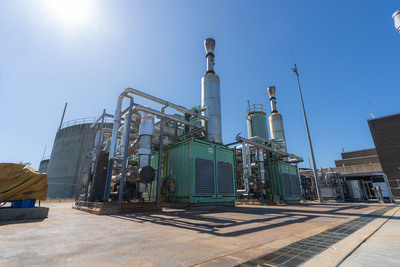
We’ve also installed solar panels in key regional plants, and are continuing to generate our own clean, renewable energy from wastewater treatment. In fact, since we were formed in 2010, we’ve generated more than 125,000 MWh from cogeneration, which is enough energy to power up to 27,000 homes for a year!
Recycled water

Another key element of our sustainability roadmap is recycled water — water that has been used once and then treated to remove contaminants, making it safe for reuse, rather than returning it to the environment.

Adding recycled water to the mix eases pressure on our drinking water supplies, reduces nutrients in waterways, and improves the well-being and liveability of communities. Recycling water also reduces energy use, which leads to lower greenhouse gas emissions.

At the moment, we supply recycled water to hundreds of customers across our 14,000 km2 service region, primarily for agriculture and irrigation. The water is used to:

  • green local sporting fields,
  • support farmers,
  • breathe new life into country racetracks and
  • help grow new koala habitats.
     

We also supplied recycled water to Brisbane Airport Corporation to support the construction of their second runway, saving more than 500 Olympic-sized swimming pools of drinking water in the process.

Embracing growth and opportunity

If water isn’t sustainable, industry isn’t sustainable.

The demand for recycled water from industrial customers has increased significantly in the past year, and we’re thrilled to be an enabler of this important and rapid shift toward more sustainable and responsible business.

Several major international companies have recently announced sustainability strategies that prioritise water stewardship, and we’re seeing this trend mirrored at the local level too.

We recently reached out to several of our biggest commercial water users to learn more about their sustainability goals and we’re happy to hear all have set sophisticated targets — with most having specific water stewardship goals.

We’re also particularly excited about a number of emerging green industry participants who are focused on using non-potable water sources to create eco-friendly products like cardboard pulp, green hydrogen and concrete.

Right now, we recycle an average of around 10,000 megalitres of water every year, but as more and more customers show interest, we’re excited to explore ways to increase our impact together and meet their evolving Environmental, Social, and Governance (ESG) needs.

Customers with a commitment to sustainability aren’t just setting the standard but shaping the future, and we’re here to support them every step of the way.

Brisbane 2032…

The recent announcement that Brisbane will host the 2032 Olympic and Paralympic Games has also accelerated the pace of change in our service region.

Brisbane is set to be the first climate-positive Olympic and Paralympic Games, and we’re thrilled to be playing our part to ensure large-scale, global events can be done sustainably.

As we approach 2032, we’ll work closely with customers and stakeholders to help them meet any ESG requirements set down by the organising committee for constructing sustainable precincts.

We’re also exploring opportunities to design and build innovative and sustainable water and wastewater infrastructure for key precincts that will benefit our community long after the closing ceremony.

… and beyond!

The next decade will throw up plenty of challenges as we look to shape the future of water for our customers and communities, and we’re committed to exploring all options to secure a diverse water supply for our regions.

This means further exploring the use of climate-independent water sources like desalination and purified recycled water, both for residential and industrial use.

As a water utility, we have an opportunity and a responsibility to pursue sustainable water solutions, and we’re excited to be doing so alongside like-minded industry partners. We’re committed to continuing our journey further into sustainability and helping our business customers meet their ESG requirements.

After all, waste is only waste if it’s wasted!

For more information, visit urbanu.com.au/wvsm.

source http://sustainabilitymatters.net.au/content/water/sponsored/when-it-comes-to-water-are-we-stewards-or-security-guards–355550489

Great Wrap Compostable Pallet Wrap

Great Wrap Compostable Pallet Wrap is made with food waste, which is designed as a replacement for petroleum-based pallet wrap and plastic pollution.

The product is home-compostable and can either be returned to the soil to add microbial value to agricultural land or repurposed to create new materials.

source http://sustainabilitymatters.net.au/content/sustainability/product/great-wrap-compostable-pallet-wrap-1448376303

CSIRO Roadmap could be key for renewable energy

CSIRO’s Energy Storage Roadmap has been supported by The Australian Solar Thermal Energy Association (AUSTELA), outlining the significant role that concentrating solar thermal power (CSP or CST) can play in supplying industrial heat and long-duration storage.

Keith Lovegrove, AUSTELA spokesman, said the CSIRO roadmap makes it clear that CSP technologies must play an important role in the grid and decarbonisation.

“The CSIRO Roadmap highlights the role of CSP across multiple energy use sectors in the Australian economy, including power generation, transport and manufacturing. It reveals how CSP will deliver heat to industrial processes, provide heat and power for renewable fuel production and provide long-duration energy storage to our grid leading up to 2050,” Lovegrove said.

CSP uses mirrors to concentrate and capture the sun’s energy, which is stored as heat in molten salt tanks that can deliver electricity or heat for up to 15 hours or more as needed. With this process, power can be generated all night and used to power thermal industrial processes 24/7.

Though batteries are a well-established technology for storing renewable power for short-term use, substantial amounts of long-duration storage are needed as the electricity grid transforms towards 100% renewable.

Lovegrove said the role of battery storage is well recognised, but CSP is a lower-cost alternative for medium- to long-duration energy storage. CSP also offers grid stability services when deployed in electricity networks, removing the need for synchronous condensers. CSP can also be a zero-emissions alternative to gas in powering industrial processes.

The roadmap demonstrates how much needs to be done to reach 2050 emissions targets and includes recommendations for incentivisation or medium- and long-duration storage.

“The CSIRO has recognised two difficult aspects of the decarbonisation challenge — long-duration storage and industrial process heat — and concluded that CSP is a cost-effective way to address those challenges.”

Image credit: iStock.com/AerialPerspective Works

source http://sustainabilitymatters.net.au/content/energy/news/csiro-roadmap-could-be-key-for-renewable-energy-1206080536

Smart water meters rolled out across Auckland

To better manage water usage across the city of Auckland, Watercare has started rolling out smart loggers on water meters for commercial premises. This is designed to also save on manual reads and improve billing accuracy for commercial premises.

The project is part of a service solution designed by Spark IoT that includes a device and SIM management platform that makes device and data management easier. Currently, 3300 water meters have been logged and connected on the Spark NB-IoT network to provide usage information to Watercare, with an additional 2500 meters to be logged.

Nish Dogra, Watercare’s Smart Network Lead, said this technology could improve water management across New Zealand.

Dogra said water is one of the most undervalued resources, and it is vital to give more consideration towards how it is sourced, treated and distributed. In these processes, technology is a key enabler and the smart meters being rolled out can help with water efficiency by identifying faults and leaks to be fixed.

“The data has already helped us to identify a number of large leaks on our customers’ premises, which we’ve flagged with them so they can fix them quickly. For example, one school’s water use had skyrocketed from about 6000 litres a day to more than 70,000. There was no obvious water leaking on the grounds, but a specialist leak detection agency was called in and they found a massive leak under volcanic rock that was losing about 46 litres every minute,” Dogra said.

This helped save money for the school and save thousands of litres of water.

Watercare supplies more than 400 million litres of water to Auckland every day, drawing water from 27 sources.

“By integrating IoT technology with the water management processes, operators can be warned faster of potential process issues, detect leaks more easily and improve distribution,” Dogra said.

The new technology will play a greater role in how Watercare and its customers manage water, according to Spark’s Principal Innovation Business Development Manager, Matt McLay. This transition to a smart meter network will improve sustainability and efficiency.

McLay said the smart meters will help monitor water use efficiency, optimise billing accuracy, promote more efficient consumption and deliver maximum value to businesses. The NB-IoT network provides wide coverage and is suited to battery-powered metering systems. It is also activated across cell sites, providing coverage to about 90% of the population.

Research analysis commissioned by Spark IoT and undertaken by NERA Economic Consulting shows that water metering solutions can provide a potential net benefit of NZ$28 million in the market across a 10-year period up to 2027 from efficiencies and cost savings.

source http://sustainabilitymatters.net.au/content/water/case-study/smart-water-meters-rolled-out-across-auckland-279899978

Scientists successfully ‘hack’ photosynthesis

Researchers have ‘hacked’ the early stages of photosynthesis and discovered ways to extract energy from the process — a finding that could lead to new ways of generating clean fuel and renewable energy.

Led by the University of Cambridge, a team of physicists, chemists and biologists studied photosynthesis in live cells at an ultrafast timescale: a millionth of a millionth of a second.

Though photosynthesis is already a very well-known and well-studied process, the researchers found that it has more secrets to tell. By using spectroscopic techniques to study the movement of energy, the researchers found the chemicals that can extract electrons from the molecular structures responsible for photosynthesis do so at the initial stages, rather than much later, as was previously thought. This ‘rewiring’ may improve ways to deal with excess energy and create new and more efficient ways of using its power. The results are reported in the journal Nature.

Jenny Zhang, who coordinated the research, said, “We didn’t know as much about photosynthesis as we thought we did, and the new electron transfer pathway we found here is completely surprising.”

Scientists have also been studying how photosynthesis could be used to help address the climate crisis by mimicking photosynthetic processes to generate clean fuels from sunlight and water, for example.

Zhang and her colleagues were originally trying to understand why a ring-shaped molecule called a quinone is able to ‘steal’ electrons from photosynthesis. Quinones are common in nature, and they can accept and give away electrons easily. The researchers used a technique called ultrafast transient absorption spectroscopy to study how the quinones behave in photosynthetic cyanobacteria.

Zhang said this had not been properly studied in the past, but the team initially thought they had just been using a new technique to confirm what they already knew.

“Instead, we found a whole new pathway, and opened the black box of photosynthesis a bit further,” she said.

Using ultrafast spectroscopy to watch the electrons, the researchers found that the protein scaffold where the initial chemical reactions of photosynthesis take place is ‘leaky’, allowing electrons to escape. This leakiness could help plants protect themselves from damage from bright or rapidly changing light.

“The physics of photosynthesis is seriously impressive,” said co-first author Tomi Baikie. “Normally, we work on highly ordered materials, but observing charge transport through cells opens up remarkable opportunities for new discoveries on how nature operates.”

“Since the electrons from photosynthesis are dispersed through the whole system, that means we can access them,” said co-first author Laura Wey. “The fact that we didn’t know this pathway existed is exciting, because we could be able to harness it to extract more energy for renewables.”

According to the researchers, being able to extract charges at an earlier point in the process of photosynthesis could make the process more efficient when manipulating photosynthetic pathways to generate fuels from the sun. The process could also help make plants more tolerant to intense sunlight.

Zhang said many scientists have been unsuccessful in trying to extract electrons from an earlier point in photosynthesis because the energy is buried in the protein scaffold. The team of researchers thought they had made a mistake when they initially did so.

The use of ultrafast spectroscopy was key to the discovery. It allowed the researchers to follow the flow of energy in the living photosynthetic cells on a femtosecond scale — a thousandth of a trillionth of a second.

“The use of these ultrafast methods has allowed us to understand more about the early events in photosynthesis, on which life on Earth depends,” said co-author Christopher Howe.

The research was supported in part by the Engineering and Physical Sciences Research Council (EPSRC), Biotechnology and Biological Sciences Research Council (BBSRC) part of UK Research and Innovation (UKRI), as well as the Winton Programme for the Physics of Sustainability at University of Cambridge, the Cambridge Commonwealth, European & International Trust, and the European Union’s Horizon 2020 research and innovation program.

Image credit: Tomi Baikie

source http://sustainabilitymatters.net.au/content/energy/case-study/scientists-successfully-hack-photosynthesis-1195752052

Cotton farmers undergo textile waste trial

Cotton farmers in New South Wales and Queensland have launched phase 2 trials to identify a scalable, long-term solution to the issue of textile waste in landfill.

Goondiwindi’s Sam Coulton, who hosted the phase 1 trial, is being joined by Gunnedah’s Scott Morgan, a leading cotton farmer in sustainability. Morgan said his decision to take part in the trial was easy given his early adoption of a large-scale solar generation project and numerous water conservation projects.

“I’m excited about returning 100% cotton back to farms because I think it’s the right thing to do for the environment by helping close the circularity gap. My strong hope is that the cotton waste can improve soil health and organisms — thereby improving crop yields,” Morgan said.

Following flooding events in late December, Morgan was able to distribute around 2.4 tonnes of the shredded material onto an already planted cotton field, thanks to Thread Together, a charitable organisation that adopts an ethical response to the issue of fashion excess. The material was watered into the soil and the resulting crop is looking good, standing at about 50 cm and scheduled for harvest in late May.

Coulton was also impacted by extreme weather and logistics issues, managing to apply 600 kg of cotton waste onto one plot on his farm. Though this was less than hoped for, it was still significant in his second year of circularity trials. Since application, Sam has furrow cultivated and irrigated and the material has broken down significantly.

“The first phase was positive, but with COVID and poor weather we were limited in what we could achieve. I am hopeful this phase will lead to a major transformation in cotton circularity,” Coulton said.

Soil scientist Oliver Knox, who is overseeing the trials, has found that cotton textile waste has no adverse impact to soil health or cotton yields.

Knox said new test results from Phase 1 were very encouraging.

“We found that organic carbon in the top 10 cm of soil from phase 1 has increased to 1.08% from .77% and that is a significant jump. Sulfur has also increased from 4.5 mg per kg to 7.4 mg per kg and that indicates improved soil fertility and health,” he said.

For the 2022/23 trial, program partners Cotton Australia, Goondiwindi Cotton, the Cotton Research and Development Corporation (CRDC) and Sheridan have been joined by Thread Together.

According to Thread Together CEO Anthony Chesler, the company is dealing with excess stock rather than cotton waste.

“Thread Together never declines a donation of excess clothing and sometimes this creates more supply than demand. As part of this new challenge, we were pleased to work with Worn Up to ensure 100% cotton garments were shredded and dispatched to Gunnedah,” Chesler said.

Tanya Deans, President Hanes Australasia, said progress towards circularity is an important part of sustainability, and Sheridan, together with the wider Hanes businesses, is committed to the cause.

“I’d also like to thank the CRDC and Thread Together for supporting this mission with their generous contribution as well. This is just the beginning of innovative solutions on our shores and we are proud to be a part of it,” Deans said.

CRDC provided funding for Knox to continue his research and development and has committed almost $2m in funds over the next three years for a suite of projects to complement the initial work and increase understanding of the topic.

“This program could be a game changer, but we need scientific rigour to fully appreciate the soil science and the long-term impact of returning cotton textiles to the farm: carbon footprint, impact on soil health, waterways, benefits to farmers, brands and other stakeholders,” said CRDC Executive Director Ian Taylor.

One of the projects currently underway is a three-year investment with the University of Newcastle to further investigate the effects of dyes and finishes from waste material on soil health, especially on the diversity, growth and functioning of soil microbes, which are critical for the health and resilience of soils across the landscape. The project will also look at ways to pelletise cotton textiles through biological breakdown of the waste material to enable spreading on fields using existing farm machinery.

Brooke Summers from Cotton Australia is leading the Goondiwindi and Gunnedah circularity project.

She said the phase 1 results show it’s possible to find a solution and help close the loop on circularity. Phase 2 should help bring this solution a step closer, but only with the committed involvement of governments, industry groups, brands and potential investors.

Phase 2 will be monitored closely by Dr Knox at both locations with all results being scientifically assessed before a full report is produced to guide future circularity developments.

Image credit: iStock.com/dszc

source http://sustainabilitymatters.net.au/content/sustainability/news/cotton-farmers-undergo-textile-waste-trial-441001718

Solutions for end-of-life solar panels being researched

Australia’s renewable energy sector is facing a quandary: how the nation will dispose of 80 million solar panels in an environmentally friendly way when they reach end of life.

People are installing solar photovoltaic (PV) panels to help the environment, but the industry now faces the anticipated waste that will be generated by 100,000 tonnes of panels due to be dismantled in Australia from 2035.

A University of South Australia (UniSA)-led study has proposed a product stewardship scheme for solar panels, which was prioritised by the federal government several years ago.

In a paper published in AIMS Energy, UniSA researcher Peter Majewski said incentives are needed for producers to design solar panels that can be more easily recycled.

“Australia has one of the highest uptakes of solar panels in the world, which is outstanding, but little thought has been given to the significant volume of panels ending up in landfill 20 years down the track when they need to be replaced,” Majewski said.

With landfill bans already in place in Victoria, installers have had to start thinking of recyclable materials when making the panels. Majewski said landfill bans are a powerful tool but require legislation to ensure waste is not just diverted to locations with fewer regulations.

Serial numbers that can track a history of solar panels could also help to monitor their recycling use and ensure they are disposed of in an environmentally friendly way.

“Several European nations have legislation in place for electric car manufacturers to ensure they are using materials that allow 85% of the car to be recycled at the end of their life. Something similar could be legislated for solar panels,” Majewski said.

A primary material used in solar cells is silicon, which is the second most abundant material on Earth after oxygen and the most common conductor used in computer chips. Because there is such a large demand for silicon, it is important to recycle it and reduce its environmental footprint.

“About three billion solar panels are installed worldwide, containing about 1.8 million tons of high-grade silicon, the current value of which is US$7.2 billion. Considering this, recycling of solar PV panels has the potential to be commercially viable,” Majewski said.

A potential solution is reusing panels, but users will need guarantees that second-hand panels will work properly and provide a minimum capacity in watts.

According to Majewski, any end-of-life legislation will need to address existing and new panels and support the creation of a second-hand economy.

A levy on the panels may also be needed to help finance an end-of-life scheme.

Image credit: iStock.com/anatoliy_gleb

source http://sustainabilitymatters.net.au/content/energy/article/solutions-for-end-of-life-solar-panels-being-researched-1643659029

Australasian Waste & Recycling Expo in Sydney this July

Australia’s national platform and trade event for the waste, recycling and resource recovery sector returns to Sydney in 2023. Running from 26–27 July at the ICC Sydney, visitors to will be able to explore a showcase of full circle innovative products and sustainable solutions to collect, process and recycle waste more smartly. Expect to see some of our nation’s leading brands including Isuzu Trucks, Komatsu Australia, Telford Smith Engineering, STG Global, NSW EPA, HYVA and Liebherr-Australia.

Visitors can look forward to a specially developed show floor reflecting the changing and developing market, featuring three new and returning zones — the recycled zone, innovation zone and organics zone, sponsored by the Australian Organics Recycling Association. Plus, two free-to-attend education theatres, covering an impressive array of topics across key industry actions and insights from policy and regulation, trends and insights to practical and tangible solutions from innovators shaping the future direction for Australia.

Returning after its inaugural debut in 2022, the AWRE summit will now run for a full day in 2023. ‘Australia’s Reality Check — Recycling & Residuals’, will cover topical areas including the state of our resource recovery system, the reality, roadblocks and solutions to help us progress towards national targets and the challenges and policies surrounding residuals management in Australia. Hosted by the Australian Council of Recycling, National Waste and Recycling Industry Council and Waste Contractors and Recyclers Association of NSW, delegates can look forward to high-level collaboration between industry, government and waste generators.

Beyond the exhibition and summit, AWRE will also be introducing its new AWRE Awards, a new and exciting initiative in 2023. The awards will shine a spotlight on the waste, recycling and resource recovery industry’s latest innovative solutions, most impactful and inspiring projects, and the individuals and companies leading them. Stay tuned for further updates!

AWRE is set to offer an exciting agenda of events across the two days, with registration now open. Discover the latest in waste and recycling and connect with like-minded experts as we propel Australia to lead the charge to global and national waste targets — together. Find out more and register free online here!

For more information, visit here.

source http://sustainabilitymatters.net.au/content/waste/article/australasian-waste-amp-recycling-expo-in-sydney-this-july-1469420283